CMF focus
Halcyon’s craft-led approach to personalised restomods

Car Design News dives into the typically hidden process of designing a personalised restomod with head designer Patrick McCallion
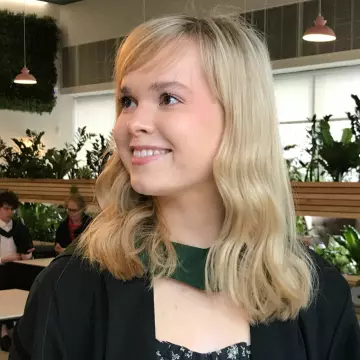
Sat in the exact seat a prospective customer would be in, with head designer Patrick McCallion surrounded by CMF samples laid out thoughtfully in complimentary colours and textures, it’s easy to see how Halcyon creates magic.
Halcyon, a company that is only three years old, is known for its personalised restomod work on Rolls-Royce vehicles for an array of high-profile clients. Car Design News first encountered the company at the Hampton Court Concours of Elegance, where Halcyon debuted their Highland Heather Rolls-Royce Corniche EV.
Today, McCallion is taking CDN behind the scenes of the personalisation process. From getting to know the customer to creating mood boards to CMF samples, the process is all-encompassing to create a one-of-a-kind vehicle.
“Sketching is still the main language,” McCallion begins, flicking through a wad of A4 sketching paper, each one full of expressive strokes bringing innovative ideas, hacks and functions to life. “This is how we communicate initial ideas to the client.”

McCallion gets his inspiration from his research into British craft, techniques and artists – “each time I’m inspired by something, I save it in a big folder I’ve named ‘cool images,’” he laughs. These images make up his mood boards, which typically draw from the fashion and watch industries as well as natural landscapes, materials and textures. “I could design a car just based off this this image of a watch,” McCallion remarks while admiring an image of a Breitling Premier B09 Chronograph 40 watch with a pistachio green dial and a brown alligator leather strap.

Materials make up a large part of McCallion’s focus, also doubling as his passion after undertaking craft-based design courses in Northern Ireland, where he was raised. “We had a freedom to explore materials. One day, we had a module where a piece of wood was brought in and we were given an electric saw. We were told to use the natural grain of the wood to sculpt something. I got really lucky because I got this rotten piece of wood,” McCallion laughs, “so the outer shell was still strong, but the inside was rotten. I took a saw to it, and it started to become the shape of an elephant. It sounds mad but it was the natural material telling me what the story was.”
This respect of materials has followed through to his work at Halcyon, where an almost obsessive attention to detail underpins every decision. Every surface, junction and hidden mechanism is considered not just for how it looks, but how it behaves, ages and communicates meaning.
For McCallion, many of the most important elements are not immediately visible. He describes a process where hidden functions and unseen details are given the same level of care as the more expressive surfaces, reinforcing a belief that true luxury lies in the integrity of the whole object, not just what is on display.
That thinking is closely tied to his approach to materials. “I don’t like forcing materials to do things that they don’t want to do,” he says. Rather than imposing form, McCallion allows the natural behaviour of materials to guide the final look. He references a project where an ashtray was removed from a door card, but the underlying structure could not be altered. Instead of re-engineering the substrate, the team collaborated with a veneer specialist to manipulate the material itself, creating a three-dimensional sculpted surface that worked with the grain rather than against it. “I would rather know how it works and then design around that,” McCallion reflects.

This philosophy is evident in Halcyon’s gallery panel within the Highland Heather Corniche EV. Beneath the wave-like chrome surface sits a complex technical assembly – circuit boards, fixings and structural elements – while the visible layer presents a reflective rippling effect that appears to float. Milled aluminium was selected not only for its aesthetic qualities but also for its ability to meet strict functional requirements while maintaining a sense of lightness.
Such solutions are made possible by Halcyon’s low-volume, highly bespoke production model. “There are no moulded or vacuum formed parts,” McCallion explains, highlighting the freedom this brings. Without the constraints of mass manufacturing, parts are machined individually, allowing for greater flexibility in both form and material application. This opens up creative opportunities, but also introduces new challenges, as each component must be resolved with absolute precision.
The environment in which these ideas take shape reflects the same mindset. Along one wall, a cabinet holds an extensive library of leathers and decorative veneers, each offering a different starting point for a conversation. “Our relationship with our customers just evolves,” McCallion says. He describes a deliberately informal approach, often moving communication onto platforms like WhatsApp early on to encourage a more natural dialogue. “I’ll straight away set up a team WhatsApp to have an informal chat,” he explains, noting that this helps build a clearer understanding of the person behind the commission – their tastes, habits and emotional responses.

Over time, these interactions evolve beyond a typical client-designer relationship. Clients may visit simply to have a cup of tea in the studio, and the process becomes as much about collaboration as it is about delivery. This level of engagement is particularly important given the context in which these cars will live. Many customers have extensive collections, and each new addition must earn its place. “I want our car to stay in their collection,” McCallion says.
Storytelling plays a key role in achieving that. “I like to tell a story, and I think customers expect that,” he explains. “I’m constantly finding something that I’m interested in and then somebody that can make it,” he adds, describing a process that naturally leads into collaboration. Rather than producing every element in-house, Halcyon actively works with specialist craftspeople – from veneer experts to leather artisans – bringing in expertise developed over decades – “I’d prefer to work with somebody that’s done it for 30 years,” he says.
Even functional elements are treated with this level of consideration. The battery, for example, is integrated into the design via a dedicated plinth, giving it a defined presence rather than concealing it entirely. It is a small gesture, but one that reflects a broader philosophy: that every element, no matter how technical, has a role to play in the overall composition.
Ultimately, what Halcyon produces is a vehicle shaped by materials, defined by craft and grounded in a narrative that connects client, designer and maker.