Considering the Tesla Roadster: "The last, best driver's car"

Tesla debuted its latest Roadster in a pyrotechnic show of automotive gymnastics. But is the car more than smoke and mirrors?
By now you all have seen it. The dramatic climb up a vertical ramp to hang upside down like a spider. The thrilling spiraling leap over Tesla’s current lineup. The 0-60mph (0-100 kph) in under a second acceleration demo. The blasts of nitrogen from the car’s onboard cold-gas thrusters.
It was a dramatic reveal that would get the approval of P.T. Barnum and remains in keeping with Elon Musk’s over-the-top introductions. Jaded automotive insiders and journalists cast a jaundiced eye on the theatrics, but the public was delighted. Social media platforms lit up with videos of the flying circus, with many proclaiming the imminent coming of the long-awaited flying car. Humorous memes illustrating potential use-case studies (most of them absurd) sprouted all over the internet. And Governor Ron DeSantis declared that he would ensure that the Roadster would be legal in the State of Florida.
Reader: you have been warned.

But seriously, what is the Tesla Roadster? Is it truly a car, or just an extremely clever bit of automotive/rocket wishful thinking? The truth is, a little bit of both.
At its core, the Roadster is a two-seat supercar with a flowing/wedge-y design, an insane amount of horsepower, a minimalist interior and a whole package of rocketry options, most of which are not currently road-legal.
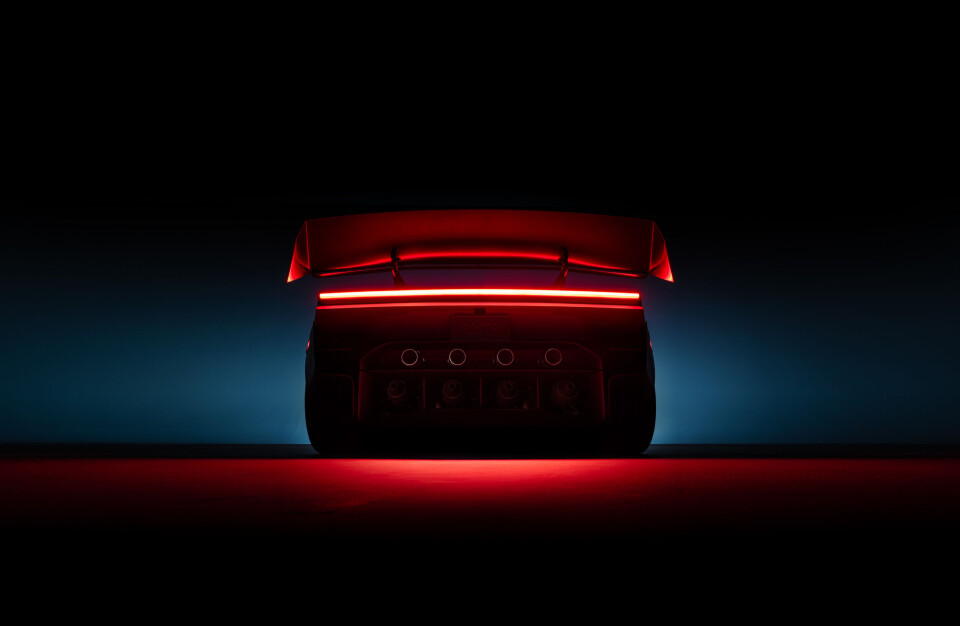
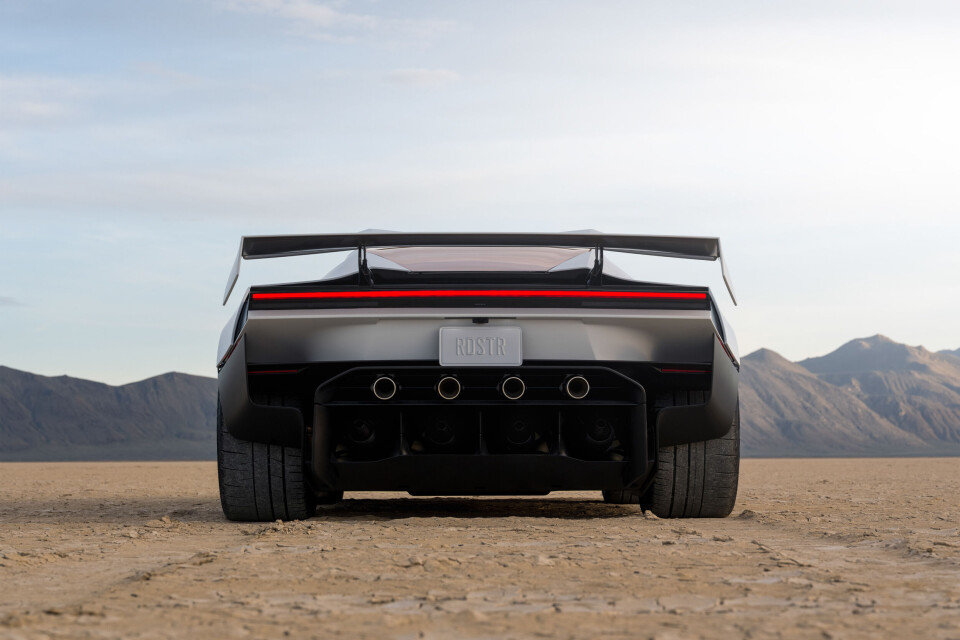
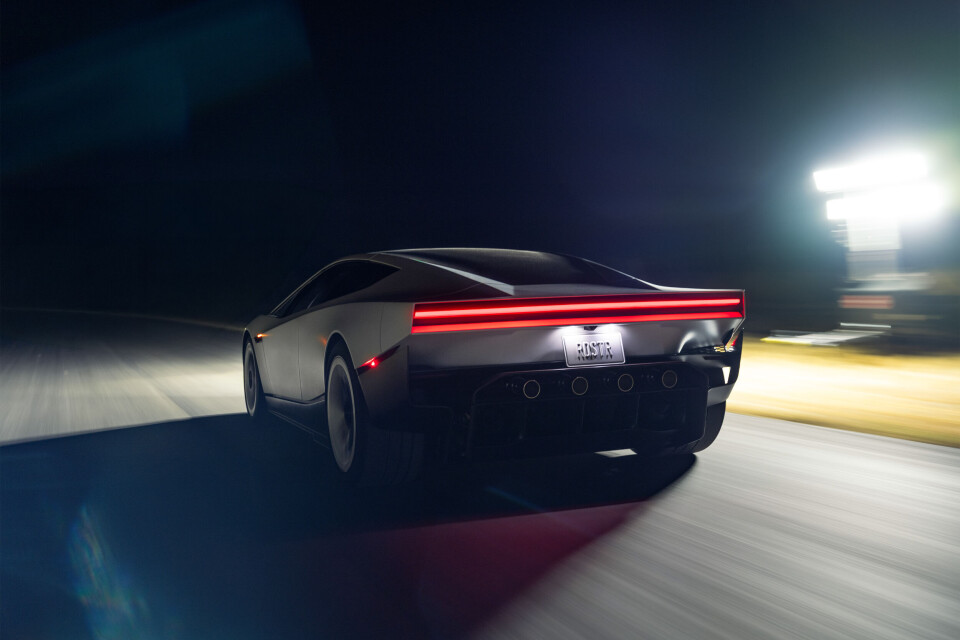
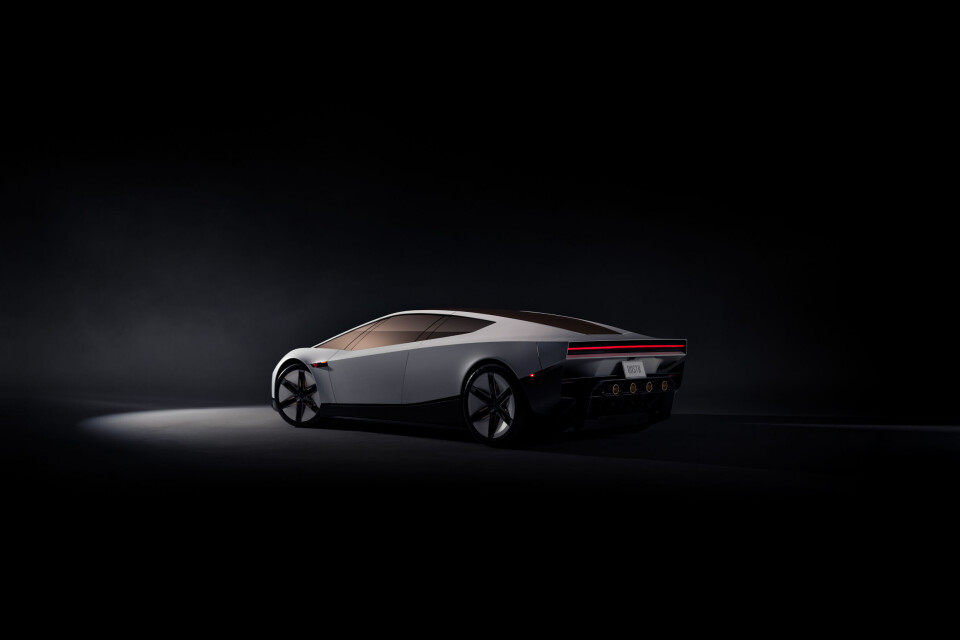
To walk around it, you sense that the design looks both backwards and forwards in time. One recognises elements of the current Tesla design language: the curvy shape of the Cybercab and the angular shape of the Cybertruck (toned down for the occasion) are both here. The pointy snout represents the evolving Tesla front end, which is moving away from the softer amphibian nose that has dominated the marque’s offerings for a decade. The rear fascia is also new with a light bar extending across the car with a crisp rectangular frame that also serves to terminate the flowing shoulder line running along the side — and also forms part of the spoiler that is integral to the active aerodynamics system.
At the same time, one can recognise elements of classic super cars. More than one critic has noted the overall resemblance to the Lamborghini Gallardo, some also cite references to the Lamborghini Aventador and even the Countach, mostly because of the wedge-shaped nose and overall profile.
The front fenders and side shoulder line have a hint of Ferraris like the Testarossa. And the submersible Lotus Esprit, of James Bond fame, is directly referenced as an inspiration, given its dual purpose car/submarine capabilities. The Roadster is not interested in swimming with the fishes however. It has set its aspirations higher, as befits a company that began in a hangar that produced rockets and spacecraft. And, by the way, that Lotus Esprit, known affectionately as “Wet Nellie”, is now owned by, guess who: Elon Musk. You just know it spent some time in the design studio, and at the Roadster reveal.

All this might suggest that Franz von Holzhausen and Co. cleverly collaged the design of the Roadster from various classic sources and added rockets and massive electric motors. The truth is more functional and nuanced. A more appropriate comparison might be the European Concorde and the Soviet Tupolev TU-144. The two supersonic planes look similar because the aerodynamic forces that acted on them were similar (the Tupolev gets extra credit for those cool ‘moustache’ canards just behind its cockpit). The Roadster looks similar to other supercars because it too deals with the same aero- and road-dynamics.
Speaking of aerodynamics, the Roadster employs a number of active aerodynamic features that help keep the car stable at speed. The sharp nose allows for minimal front surface to break the air, while a spoiler underneath directs air underneath the car, which then exits through a flap at the cowl, which opens at speed. At the rear, a spoiler deploys to create downforce on the tail. Plenty of supercars have active aero features, this is nothing new. But combine them with rocketry adapted from Space X and you’ve got something special.



Franz von Holzhausen calls the Roadster, “The last, best drivers car” Towards this end Tesla proposes four variants of the Roadster. The “ Base” or “Standard” model is a two-seat ultra-fast electric car, rear-wheel drive with a new battery cell chemistry and configuration, and dual motors delivering 1 megawatt (about 1,350 horsepower).
The “Performance” model augments the above with a multi-model suction fan to create enormous downforce to assist in road handling. The “Thrust” model further incorporates a 200-litre tank of nitrogen pressurised at 10,000 PSI to power the four cold-gas thrusters at the rear of the car. Massive acceleration is expected with this model. And finally, the “Rocket” version, adds a second, 400-litre tank of nitrogen in place of the passenger seat to power the vertical thrusters, which allows you to launch or jump over obstacles. It’s not really a flying car, as its flight distance is rather short. But very dramatic, to be sure.
The “Base” and “Performance” models are probably the only versions of the car you will ever see on the road (outside of Florida). But, in some ways, Tesla is promoting a new breed of sports car, one that has the potential to become a personal spaceship, albeit one that stays close to Earth. It’s a minor conceptual shift, but one that that makes you think about the future of high performance driving.


All of these remarkable works of engineering and science fiction would not be possible without a great deal of technology transfer, and it is here that Musk’s polymathic interests are to Tesla’s advantage. Space X thrusters and Optimus actuators are just a few of the technologies transferred to Tesla for the Roadster, and soon, no doubt to other Tesla vehicles. It is nice to own the entire parts bin, and to intimately know its contents.
Step through the scissor doors and sink into the cockpit and you notice the interior is remarkably minimalist. The seats are fixed and the pedals move, to save weight. The steering yoke similarly adjusts, and is optimised for drive-by-wire dynamics. There is one main screen, augmented by two smaller ones. There is not a lot of “gee-whiz” gadgetry here, this car is not a grand tourer, or a luxury sedan. Even Tesla’s Full Self- Drive (FSD) will be limited. The Roadster is focused on the (very fast) driving experience.
How to sum it all up? Tesla has reinvented its Roadster, and comes to us as part sports car, part science experiment, and, like all Tesla vehicles, a certain amount of wishful/hopeful thinking. Tesla may be dismissed as an eccentric niche player by some, but Elon Musk and company always keep the conversation about the car moving forward and looking into the future. The Roadster represents the latest of those conversations.
It will not be Elon’s last.