Interview
Designing the Tera: VW Brazil’s compact SUV
Volkswagen Brazil design head on freedom, surfacing and creating a more emotional compact SUV for Brazil
Volkswagen has long been plugged into the needs of Brazilian car buyers thanks to its rich history in the country but even local design head José Carlos (JC) Pavone was surprised at the speed consumers took to the locally designed Tera small SUV.
The Polo-based model is a white-space creation that has become the country’s best-selling car after launching May 2025.
“I was expecting it to reach the top of the charts, because of the brand, because it’s a new product, because of the affordability. But not as fast as it did,” he tells Car Design News in an interview.
The design likely played a large part in its success. Pavone says that when VW Group CEO Oliver Blume first saw the car, he described it as a ‘baby [Porsche] Macan’. The Tera has the same sculptural solidity of larger, more muscular cars but for a start price equivalent to £14,900.

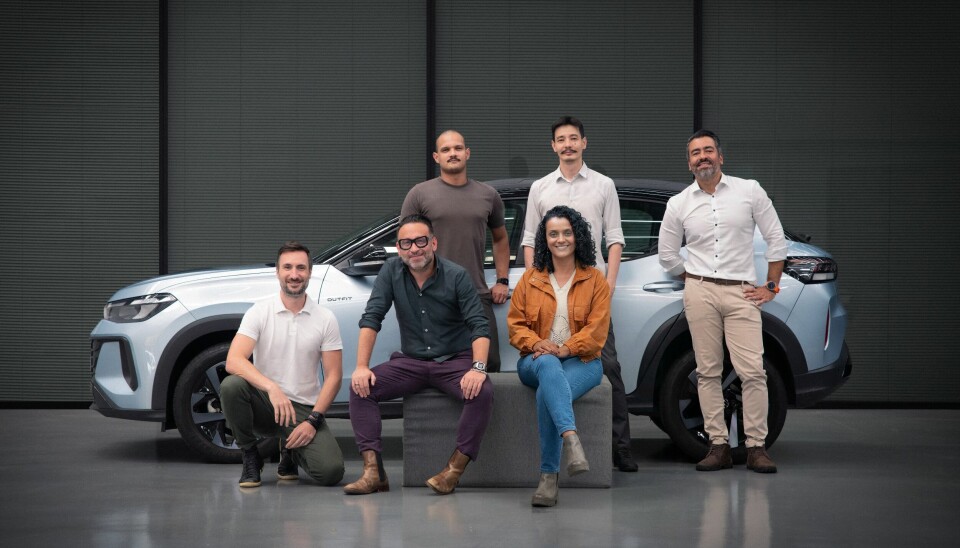
Brazilian-born Pavone has overseen VW’s South American design operation since 2016. In 2023 he was given responsibility for North America too, but his base remains at VW’s busy Sao Paulo studio with its team of 65.
This local capability allows the team to tap into Brazil’s long-term affection for VW as it fights new rivals from China and elsewhere. “When I was born in the late '70s, we had just for brands: GM, Fiat, Ford, and VW. When I was a young boy, I thought VW was a Brazilian brand,” he said.
The Tera was designed to leverage the region’s continued enthusiasm for SUVs and keep pace with a shift to more sophisticated, emotionally designed budget rivals like Renault’s Sandero-based Kardian.
The base was VW’s low-cost MQB A0 platform as used by the local Polo but Pavone’s team wanted a much more substantial overhaul compared to 2020’s Nivus, a more coupe-shaped crossover take on the Polo (known as Taigo in Europe).
“We had much more freedom in this car in relation to the Nivus,” he said.
Whereas the Nivus borrowed more Polo parts including the doors, the exterior of the Tera is all new. Only the windshield remains from the Polo and that was a conscious decision from Pavone not just to save cost but give the top half a lower profile in contrast to the chunkier body work.


Furthering that effect, the C-pillar is pushed in to better flare out the rear haunches to create the sculptural look Pavone was after. “I remember a couple of the guys from technical development looking at it saying, ‘wow, it's amazing what you can do with the Polo’,” he says.
He pushed for and got the black strip connecting the high-mounted taillights. “This was really a fight with the financial department, but it’s something we’re very proud of. It almost looks like a baby [VW] ID4, which is a much more expensive car,” he says.


He did lose a fight to gain a front lightbar however, something that is replicated with a chrome strip.
Gone are the “Martin Winterkorn era” straight lines on the side of the car that persisted on cars like the Nivus and Polo to communicate the company’s capacity to produce perfectly aligned panels. “We ditched the lines for something more sculptural, which I believe ages better,” Pavone said.
The interior of the car was more dictated by the Polo in terms of the hard points and position of elements like the door handles and air vents but Pavone and his team redesigned the instrument panel to add a new floating touchscreen sitting on its own shelf.

The team also overhauled the user interface on the screen. “We made it a bit more alive, with a little bit more colour than we had in the first generation Nivus,” he said. That included an animated AI helper dubbed Otto styled with a nod to VW Brazil’s beloved and long-running Type 2 Kombi bus.
Brazilians generally are switched on to the latest tech but the issue of disappearing buttons in the digital switchover is a hot topic here too, particularly with the state of roads. Pavone is aligned with VW design in Wolfsburg in getting them back. “My building is in a nice area but I have to drive down a street that is really irregular. There I cannot adjust the AC on my ID4!” Pavone says.
The confidence VW has shown in this car is displayed in one of the five ‘Easter eggs’ in the design, which depicts a silhouette of three Brazilian VW models: the Beetle, the Gol and the Tera. We all know about the Beetle and the Gol hatchback is equally important in Brazil, where it dominated sales from its introduction in 1980 until replaced by the Polo in 2022. By including the Tera, VW is boldly saying this car will become a sales icon like its predecessors.
VW’s operation in Brazil is very much localised with five models going through the design process here for launch by 2029. By then Pavone expects 90 percent of VWs sold in Brazil to be designed by his studio, giving the company a bulwark against the rising competition from the Chinese.