CDN Long Read
Fritz Lang’s Metropolis at 100: a future we still recognise
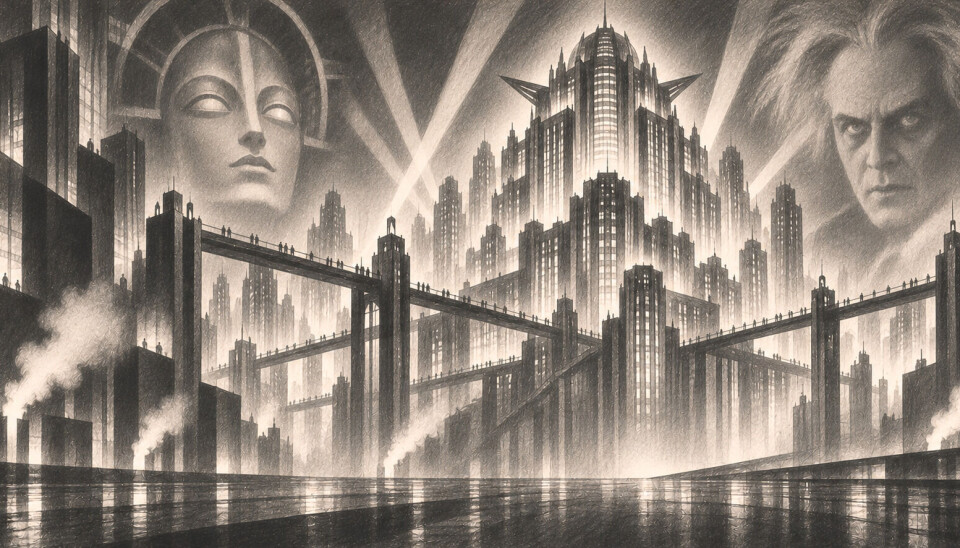
In 2027, it is the centenary of Fritz Lang’s Metropolis. What does Lang’s vision of the future tell us about the current moment we are in, asks Felix Kilbertus
In 2027, Metropolis reaches an unusual convergence: nearly a century since its release, and the very year in which its story is set. Few works invite such a direct comparison between imagined and lived futures.
Lang did not so much predict the future in technological detail, but imagined in Metropolis a world ruled by images and systems. It did not foresee the ubiquitous smartphone for example, but he captured the systems that organise so much of it: power and spectacle.
The film is in part also a response to the collapse of the optimistic machine-worship that characterised pre-World War I Futurism.
As a consequence of the experience of warfare on a truly industrial scale, the machine in itself ceased to be a straightforward symbol of progress. Many intellectuals and artists who had celebrated modernity before 1914 were forced to confront the reality that technological advancement and moral advancement were not the same thing.
Systems and Power
Metropolis is structured as a starkly divided society, a city run by invisible labour. High above ground: a well-toned elite and dashing leisure, vertical architecture, and controlled abundance. Deep below: a workforce reduced to function, labouring in synchrony with machines that dictate their rhythm.
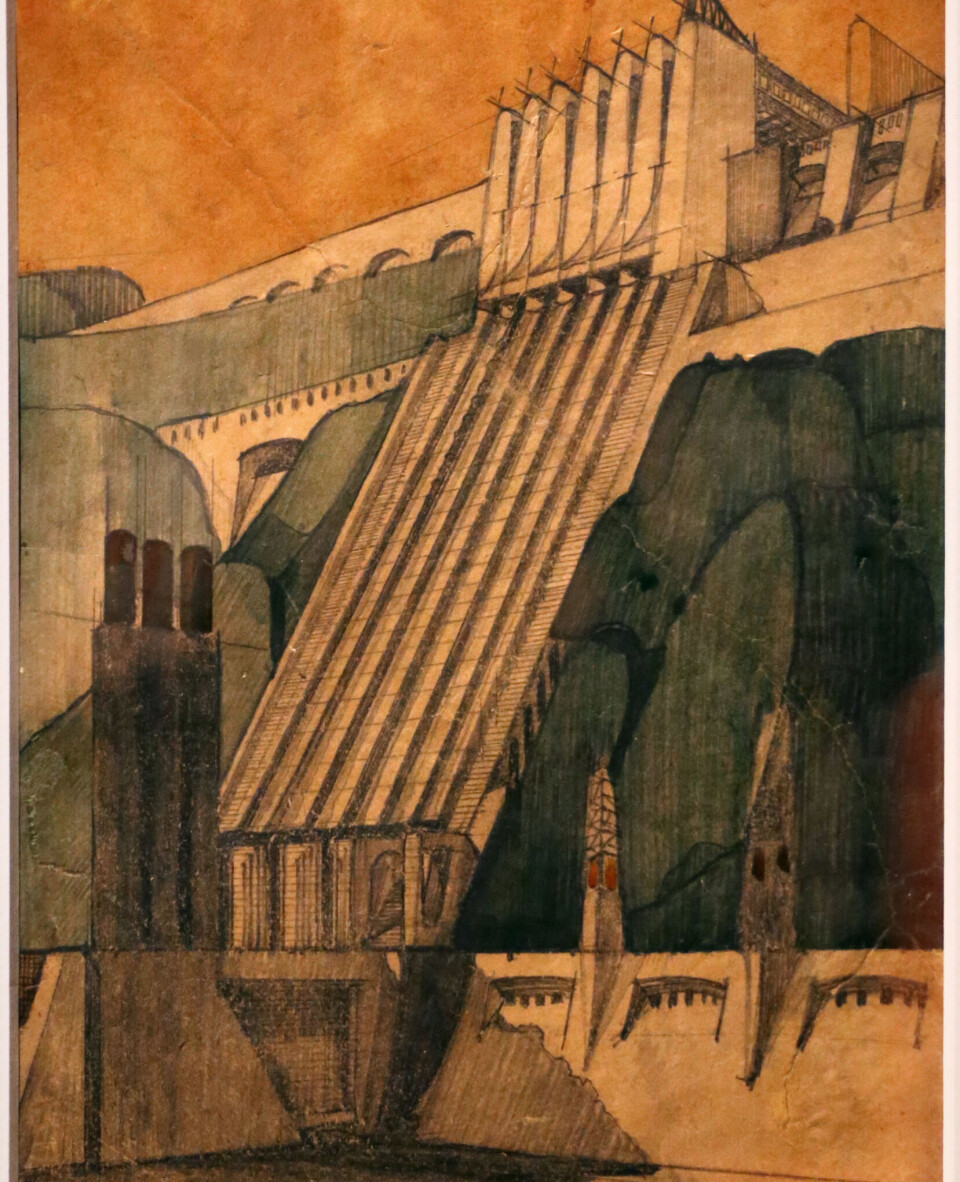
Visually, Metropolis owes a great deal to the soaring Futurist visions of architect Antonio Sant’Elia. But here, the machine creates wonders above ground and suffering below ground.
Metropolis does not necessarily predict all our technologies, but it presciently reveals how systems of power adapt to them
Futurism often glorified the dissolution of individuality into collective energy, speed, and force. In Metropolis, exhausted workers resemble machine components rather than empowered modern citizens. Lang takes the Futurist dream of collective industrial humanity and turns it into a nightmare.
Authority is abstracted into a corporate logic, insulated, and unaccountable. Coordination happens remotely via a technology, uncannily resembling video calls. Remarkably, there is no middle, the absence is striking. Consumption is implied — advertised, illuminated, monumental — but the class that would sustain it is missing. The city operates as a closed circuit of power and production.
The spaces reflect this hierarchy. Movement at street level is rare. Instead, pedestrians circulate through vast, enclosed interiors: mall-like, controlled, detached from natural environments. Even leisure is curated. A tropical pleasure garden, lush and artificial, is reserved for the city’s elite: a secluded space where young women are presented, selected, and consumed as part of a ritualised display of power. It is difficult, from a contemporary vantage point, not to recognise the structure of such arrangements.

The film also anticipates the manipulation of collective emotion. A humanoid machine — constructed by a scientist operating at the edge of power — is given a stolen identity. A woman’s likeness is replicated without consent, her image turned into an instrument.
This artificial double is then deployed to incite chaos. She performs, seduces, agitates. Disorder follows.
Today, the mechanism feels familiar. Identity can be copied, distorted, and scaled. Synthetic personas circulate widely, amplifying outrage, accelerating conflict, and reshaping public perception. The tools differ; the strategy does not. Metropolis does not necessarily predict all our technologies, but it presciently reveals how systems of power adapt to them.
Visual grammar that never quite went away
If the film’s systems feel contemporary, its imagery has become foundational.
The Maschinenmensch remains the film’s most enduring form. Smooth, metallic, humanoid — it established a visual grammar for artificial bodies that persists across cinema, design, and fashion.

It also codified another archetype: the inventor. Rotwang, with his wild hair, prosthetic hand, and electrically charged laboratory, defines the figure of the obsessive, morally ambiguous scientist. The bubbling apparatus, flashing coils, and theatrical machinery of transformation have become visual shorthand ever since.
Many a homage is familiar: Doc Brown and his time-travelling DeLorean reinterprets the same figure — eccentric, brilliant, surrounded by volatile equipment — transposed into a decidedly more benign register. The set has changed, the archetype remains.

The robot itself follows a similarly long trajectory. In Star Wars, the Ralph McQuarrie designed C-3PO appears as the only fully metallic and spotlessly shiny humanoid in an otherwise often gritty and characteristically half-finished Star Wars universe. That form is later reworked by Hajime Sorayama into hyperreal, highly polished figures that reintroduce distinctly female anatomies, resplendent in the brightest hyperrealism.

Fashion absorbs the language in turn. Thierry Mugler’s 1995 collection translates the robotic body into sculptural couture — an aesthetic revived when Zendaya wore the archival piece decades later.
Metropolis’ influence is directly felt – and perhaps most brilliantly developed – in Ridley Scott’s rainy and dystopian 1982 masterpiece Blade Runner, with Syd Mead’s legendary contributions to the production design
All this relates back to the production design work of Walter Schulze-Mittendorff, the trained sculptor contributing to the film’s look. Robotic femmes fatales never again left the silver screen, with Ex Machina’s Ava character one of the most hauntingly credible depictions of embodied AI to date.

Across these iterations, one idea persists: the artificial body as spectacle, as desire, and as threat. No longer a cinema fantasy, in 2026 we are used to new humanoid robot models entering into industrial production and to electronic identity theft as part of the news cycle. We can’t say Fritz Lang’s film – and Thea von Harbou’s screenplay – haven’t warned us.

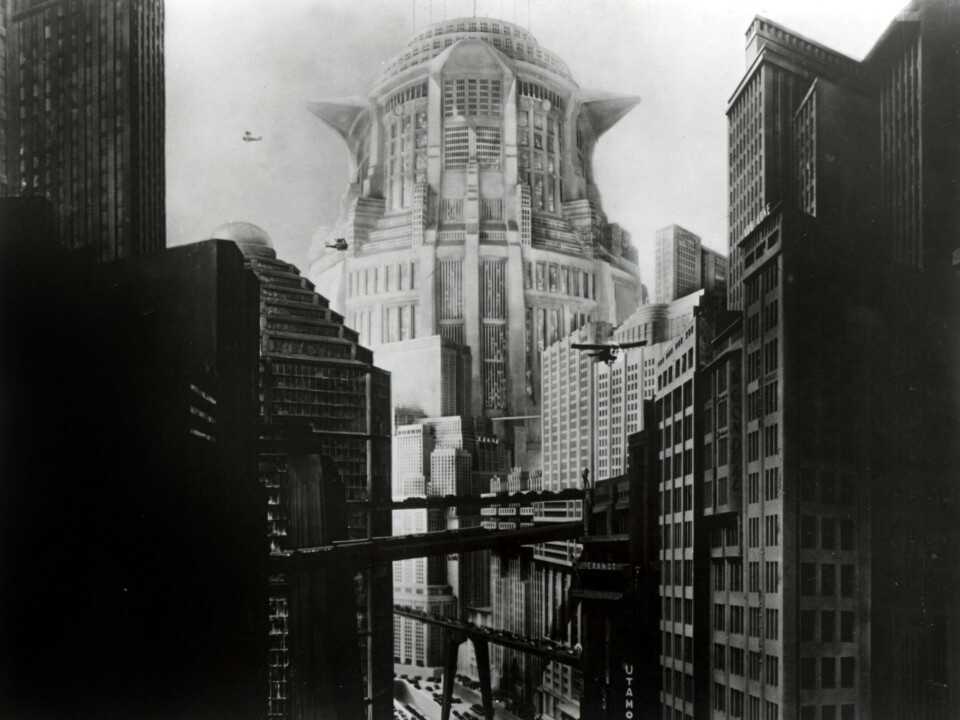
The depiction of the city itself also has had an afterlife. Itself an extrapolation of the rising skyline of 1920s Manhattan and Futurist aesthetics, Metropolis’ influence is directly felt – and perhaps most brilliantly developed – in Ridley Scott’s rainy and dystopian 1982 masterpiece Blade Runner, with Syd Mead’s legendary contributions to the production design certainly well known to subscribers of CDN.

Futurism, Engineered
Metropolis is often treated as pure invention. In reality, some of its most striking elements were already present — if only briefly — in the world that produced it.
The Rumpler Tropfenwagen appears throughout the film, largely unmodified. Its design remains exceptional: rear-engined, teardrop-shaped, with a curved windscreen and a centrally positioned driver, and its drag coefficient of 0.28 still competitive by modern standards. By the time of filming, it was already obsolete. Too advanced, too unfamiliar, and released before overland road infrastructure could support its aerodynamic advantages, it never achieved commercial success.
Yet within Metropolis, it becomes the definitive vehicle of the future.
This is not incidental. The film’s broader vehicle design strategy reinforces it. Custom-built props, mounted on conventional chassis, feature simplified, planar bodies, forward-set cabins with bay-window like windscreens and abrupt geometries. They read less as refined streamlining and more as abstracted projections of it. These vehicles were visible only for a few seconds and limited to a handful of scenes, but demonstrate the extent of concern for coherent world building.

In retrospect, these low-res forms feel unexpectedly contemporary, closer to the flat planes and reduced geometries of the Cybertruck than to the fluid, organic streamlining that would dominate the decades following the film’s release. During production, many of the remaining Rumpler bodies were destroyed on set, some burned as part of the Maschinenmensch’s staged execution. The most advanced car of its time was consumed in the pursuit of visualising a coherent future.
Metropolis is not anti-technology. It is post-Futurist. It retains the Futurists' fascination with technological grandeur while rejecting their belief that speed, power, and machinery are automatically good
Only two examples survive today. Without Metropolis, the car — and its inventor — might have disappeared entirely from cultural memory. The Nazis almost succeed in destroying Rumpler’s legacy, which includes amongst various other Tropfenwagen innovations the patented rear suspension later used by the VW Beetle.
Image, Spectacle, Control
Metropolis is a silent film, and it is fundamentally about the power of images. Its most enduring sequences are visual systems: workers moving in synchrony, machines pulsing with rhythm, crowds forming and dissolving, machines and humans merge. Narrative recedes, the sense of spectacle dominates.

This extends beyond cinema. Instrumental for its enduring presence, in 1984 a restored version introduced the film to a new audience. Partially colourised it was set to a fresh high-tech soundtrack, all produced by electronics composer Giorgio Moroder - notorious also for another side-venture, the Gandini-designed Cizeta-Moroder V16T.
Moroder outbid David Bowie to the rights for the restoration project, and his dazzling soundtrack included performances by Freddie Mercury, amongst others. In exchange, Queen got to use footage from Moroder’s version in the “Radio Ga Ga” music video, re-introducing its aesthetic and dystopian theme to the MTV generation.
In a song reflecting on the music video’s emerging power grab over sound as the dominant creative force in music, Metropolis’ visual force became the bedrock material driving the message home, besides inspiring Stefani Germanotta’s stage name.
That shift has since accelerated. Moving image — compressed, mobile, and algorithmically distributed — now defines cultural attention. Where Metropolis required monumental infrastructure, today’s systems operate through personal devices, yet achieve even greater reach.
The underlying mechanism, however, remains consistent. Control the image, shape perception, influence behaviour. A century on, that insight feels less like speculation than recognition.
All in all, Metropolis is not anti-technology. It is post-Futurist. It retains the Futurists' fascination with technological grandeur while rejecting their belief that speed, power, and machinery are automatically good. The film asks a question that WWI had made unavoidable: if machines can transform civilization, who ensures that they serve human beings rather than consume them?
Felix Kilbertus is creative director of The Ikari Institute