A look back at Honda
Honda R&D celebrates its 50th anniversary
CDN joins the celebration, takes a look back, and also a sneak peek at the future at Honda’s North American Headquarters
In 1959, a little-known Japanese motorcycle manufacturer established its first overseas subsidiary, the American Honda Motor Company, and began selling motorcycles. The sales were modest up until 1963, when Honda hit upon the advertising tagline, "You meet the nicest people on a Honda".

Motorcycles had a tough, outlaw reputation in the U.S at that time, and the Honda advertising suddenly reframed the conversation. Yes, you could own a motorcycle and have fun and still attend church every Sunday. It fit in with the spirit of the times – youth culture, the Beach Boys – who wrote a song about a Honda bike, the Mustang, and sunny California. Honda established itself as one of the leaders in a new, friendly form of mobility. The sales soon reflected the cheerful advertising and by year’s end Honda had sold over 100,000 motorcycles, more than all other manufacturers in the U.S. combined.
In 1970 Honda began importing a car, the N600 to the U.S., but it was the Civic, introduced in 1973, in the middle of the oil crisis, that put Honda on the radar of economy-minded drivers.

Emboldened by their early successes, Honda established their first Research and Development Center in Gardena, California in 1975. At first the goals were modest – market research and consumer trends developing in the American market. But soon the concepts and vehicle designs were being developed and in 1979, the first design studios were opened.
From these modest beginnings, Honda R&D has expanded to 14 facilities in North America and a multitude of disciplines, from motorcycles and automobiles to power generation to aviation and aircraft.
In November, in celebration of 50 years of R&D in America, Honda invited select members of the press to their Torrance headquarters for a "peek behind the curtain" to see what Honda is developing in every major division of the company.
Members of the Honda team and invited journalists gathered in a studio for a bit of show-and-tell about design and engineering.
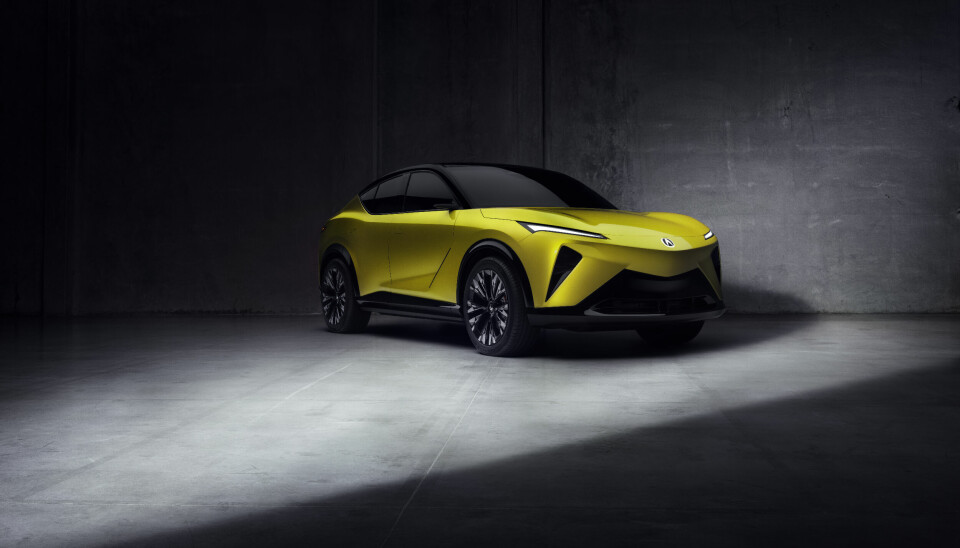
We first reviewed the development model of the forthcoming Acura RSX SUV. A clay model, half covered with DI-NOC, it showed the development of body surfacing, tumblehome and stance.

Next the assembled guests reviewed the design of the Acura ARX-06 a prototype-class race car that one might think is the product of pure engineering – no designers allowed. But there is plenty for designers to work on in this design, and not just the livery. Indeed, design and engineering work very closely together, as the car is custom tailored to a very small clientele – the drivers. An assignment to the team developing a Honda race car is considered a plum assignment.

Honda and Acura interior and CMF designers are working with internal and external suppliers to make every part of the car more environmentally friendly. Cradle-to-cradle is not a new concept, but baking it in from the very point of design conception is still a challenge, and Honda’s teams are working to get it integrated (literally) into the very fabric of every design.

Honda has been a pioneer in a number of fuel cell technologies, and the potential for energy storage system is very large in America. But setting its horizons much higher. Teaming with Astrobotic, a company developing projects for lunar bases, Honda envisions fuel cell arrays (combined with solar panels) powering future lunar bases.

Many are surprised to discover Honda has an aviation division, and has since 2006. Many are even more surprised to see that there is Honda lightweight jet in development. Team members outlined the Echelon jet’s unusual lightweight design incorporating advanced aerodynamics. The nose – a bit odd looking, is the result of advanced aerodynamic testing (in Honda’s own state-of-the-art wind tunnel, naturally). So are the jet engines, which sit above the wing for greater efficiency. The interior is being designed at Honda R&D with some of the same designers working on the next generation Hondas and Acuras.

And lastly, the Honda team took us into separate room where their newest vehicle was on display. Information about that is under tight embargo, but check back with us in January of next year and we will have the full story.
And afterwards, the irrepressible Dave Marek, currently an R&D Executive Advisor at Honda, (and soon to retire), took the members of the Press on a tour of the Hondas and Acuras on display in the facility’s expansive lobby/ museum. Marek shared stories about the development of each vehicle, the design process and the struggle of a few to be approved by product planning committees and management. Marek noted that executives at the highest levels of the company were generally supportive of these proposals.

Accompanying the impressive lineup of cars was a nice display of old-school marker and airbrush renderings, many by Marek himself. It is always great to see these renderings, some of them sketchy and fanciful. Modern computer tools and future-facing programmes such as Gravity Sketch are great, but there is a passionate quality to these old renditions that is very endearing, and seems closer to the spirit of the assignment than more modern (and yes, more accurate) digital tools.


The day- and the mission of Honda R&D was summed up by Jane Nakagawa, vice president of Honda’s R&D Business Unit:
“Fifty years ago, Honda began an incredible legacy of innovation in America by taking the bold step of establishing a research function focused on creating unique products and experiences for our customers. On the shoulders of the Honda researchers, designers and engineers who came before us, we are committed to reigniting our position as an innovator and disruptor to create new value for the next generation of Honda customers in America.”
Looking to the future, with a multitude of projects ranging from road (and off-road,) to the race track, to the skies, and ultimately to the moon, perhaps Honda R&D’s tagline should be
“To Infinity and Beyond”. We think Buzz Lightyear would approve.