Autonomous vehicles
How autonomy reshapes vehicle design: the Zoox robotaxi


Car Design News speaks to the lead designer and senior CMF designer of the Zoox autonomous robotaxi
The Zoox robotaxi isn’t a car. Not legally, not structurally and not in the eyes of the team that built it. With no steering wheel, no driver’s seat and a form that resembles a moving room more than a traditional vehicle, it represents the chance to start from scratch.
Zoox was founded in 2014 by Tim Kentley-Klay, a Melbourne designer, and Jesse Levinson, a Stanford researcher, with exactly that ambition. A small design team, working in a tight orbit with the technical and vehicle engineering departments, set out to create an autonomous vehicle that didn’t inherit the constraints or habits of the automotive world. Six years later, the result is a symmetrical robotaxi shaped by both rider experience and form language.
Car Design News spoke to lead designer Nahuel Battaglia and senior CMF designer Karoline Huber to understand what it means to design an autonomous vehicle.

Car Design News: How did the Zoox begin life and how did you approach creating a new type of vehicle from scratch?
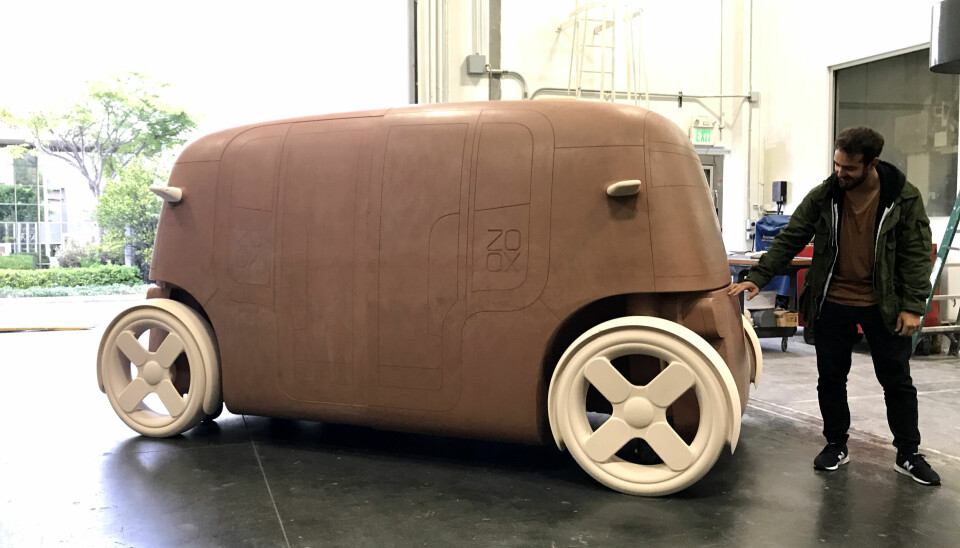
Nahuel Battaglia: Our first concepts started as sketches. Then we built 3D models in clay and foam, before creating full prototypes with real vehicle components for on-road testing.
Our product lives in the physical world with us, so it’s extremely valuable to evaluate physical prototypes. Things are different once you get them out of the computer. Clay is important as well, being able to refine the surfaces, make sure things feel just right, adds a level of refinement and human touch, otherwise hard to achieve.
By building a vehicle from the ground up, we had an opportunity to rethink the look and feel of the design of the vehicle to create something that was more approachable and built completely around rider experience and safety. We knew we wanted the design to be simple and timeless. It was important to us that it’d be easily identifiable as an autonomous vehicle and would be unmistakably recognisable as a Zoox.
CDN: How would you describe the role of design when it comes to autonomous vehicles?
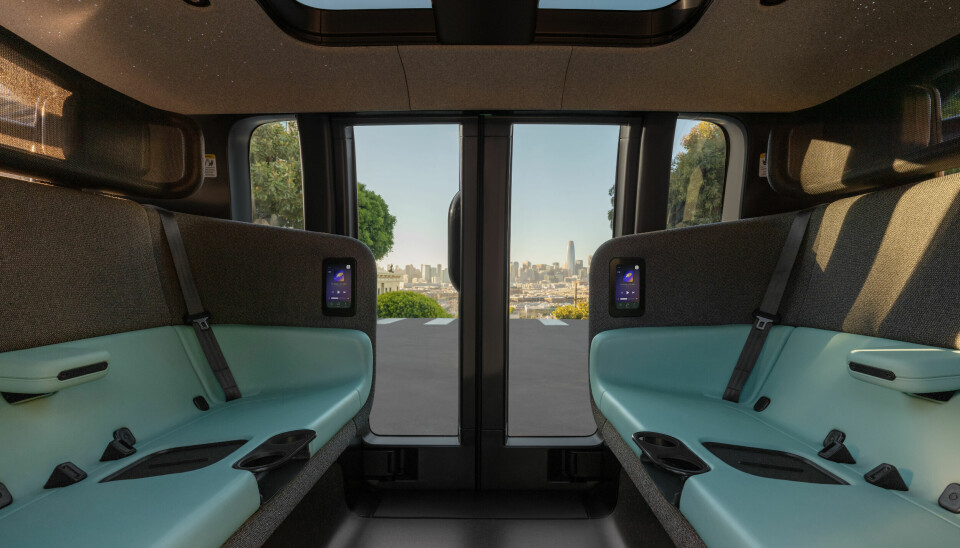
NB: Design can influence how people perceive, use, treat and respect a vehicle they don’t know, on the road. Aesthetically, our vehicle is a “modern carriage” where the interior is dedicated to the rider experience, and the exterior is focused on self-driving technology. The interior features a communal, face-to-face seating configuration that’s equal and symmetrical on both sides, so every rider enjoys an equally spacious and social experience.
With Zoox, we had an opportunity to rethink the look and feel of the design of the vehicle to create something that was more approachable, inside and out. We also had the power to start designing from the perspective of a rider, not a driver. We thought through all the elements that would make this a positive experience for the rider. It’s an entirely different way to think about vehicle design.
CDN: How is designing an autonomous vehicle different from designing a driver-led vehicle? What challenges does it present?
NB: Designing an autonomous vehicle differs fundamentally from designing a driver-led vehicle because you’re no longer creating it for a human driver, but rather an AI driver and the people it serves. For us this meant rethinking everything from the ground up. There’s no steering wheel or driver’s seat to anchor the layout, so the interior can become a shared, social space rather than a cockpit. The design must also communicate trust and clarity, because the vehicle itself is responsible for every decision on the road. Sensor placement also becomes an exterior design consideration.
In addition, because the Zoox robotaxi is created for ride-hailing, not personal ownership, we made specific design decisions like wireless chargers and charge ports at every seat to support rider experience and use cases.
In many ways, it’s closer to designing an end-to-end mobility experience than a traditional car, where hardware, software, and user experience are deeply integrated to safely move people through dense, urban environments.


CDN: The exterior of the vehicle is quite a friendly, boxy shape. How did the exterior design come into existence? Did you design from the inside to outside?
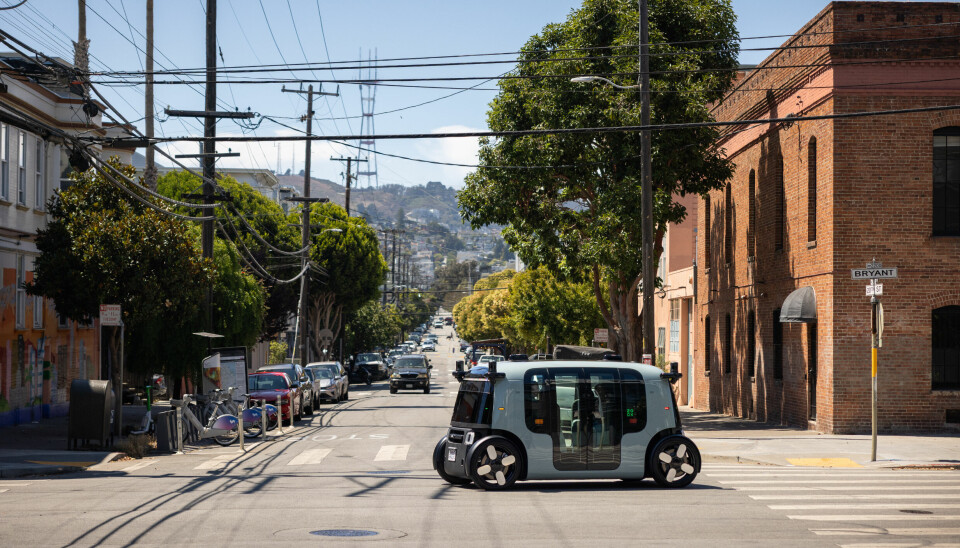
NB: Early on we decided to break free from the preconception of what a car looks like. Current car designs can come across as sporty and aggressive, with front headlights and grills that can look like angry eyes. We knew we wanted it to look friendly and approachable, with an iconic identity riders could fall in love with and want to have be a part of their lives.
We approached it as a whole, outside and in, and understanding our constraints really helped create the initial shape at once. Zoox was built and designed for urban, dense cities – not a racetrack – so our exterior design is approachable, confident and timeless. That way, it’d be easily identifiable as an autonomous vehicle and unmistakably recognizable as a Zoox. We aimed to have a recognisable silhouette, ideally as memorable as a logo, and to bring our design language into every detail.
Giving ourselves the freedom to create a fully symmetrical, bi-directional vehicle was a radical idea. It creates a new look, moving away from the speed form bent by acceleration and instead allowing it to become a timeless sculpture – slowing down and coexisting with us in our urban spaces.
The large glass doors allow for lots of natural light in the cabin and create a semi-open space that lets riders connect with the city around them. We want the rider’s initial experience to be everything they hoped riding in a self-driving vehicle would be. Zoox’s collaborative approach to design enabled us to provide riders with a tailored experience in a beautiful and comfortable environment.
CDN: There is a worry that autonomous vehicles lack an emotional connection to the passengers, how have you tried to overcome this through design?
NB: We curated the Zoox robotaxi design so riders are empowered to make the interior space and rider experience their own. When someone sits in a Zoox, we don’t want them to think about driving. Instead, we’ve intentionally designed the interior so the space should feel more like an extension of your living room or your office. We’re not asking people to squeeze themselves in the backseat of a car; we’re giving them a space to enjoy a personalised experience on their way to their destination.
We also poured our hearts into this product through years of work and attention to every detail to create something people can connect with, so that they can appreciate the vehicle and the space it creates within and around it. We like spending time in spaces that are well taken care of.
CDN: Why did you decide to have this particular seating arrangement where the passengers face each other? How did this affect the design of the rest of the vehicle?
NB: The four seating positions, arranged carriage-style, provide a large interior space and allow for more natural interactions between people so riders can make their Zoox rider experience their own. The symmetry brings equal spaces and features to all passengers.
This symmetrical design is also reflected in the exterior. We’ve placed sensors on the outside four corners of the roof, giving our self-driving technology an unrestricted view of the vehicle’s surroundings. This creates what we call a “quadrant design,” where each corner of the vehicle’s exterior and interior is exactly the same, and the vehicle’s appearance is mirrored front to back.
Together, these design and technical achievements result in a vehicle that’s uniquely suited to our mission to bring autonomous ride-hailing vehicles to dense urban environments.
CDN: Can you tell us about the CMF details of this vehicle? Why were these particular colours chosen and what fabrics and materials are used?
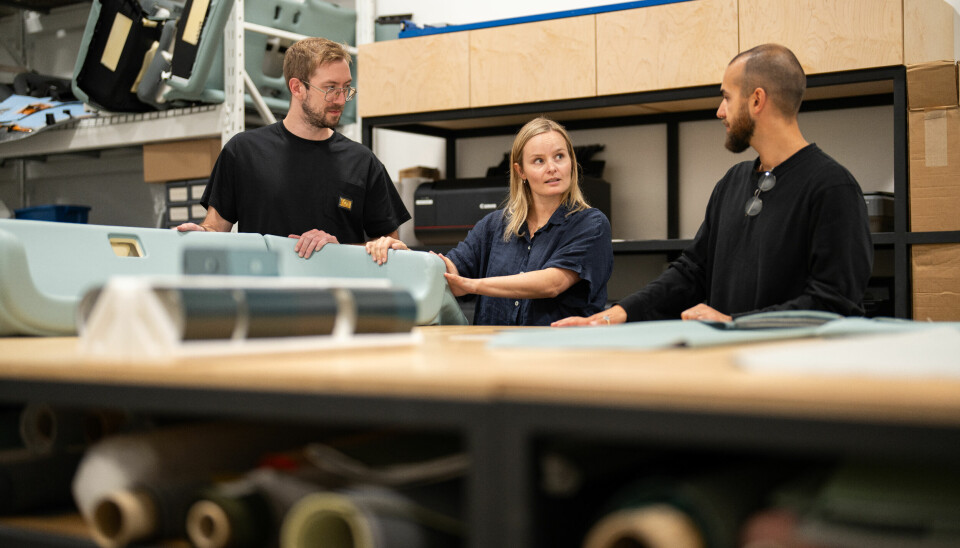
Karoline Huber: The vehicle’s exterior features a soft, pale green we call Aloe, a hue inspired by our signature Zoox green but softened with white and grey to create a more approachable, product-forward aesthetic. We intentionally chose a solid exterior colour to emphasise the vehicle’s clean, modern design.
On the interior we use PU synthetic leather for the seat cushions to provide a durable, easy-to-clean surface suitable for high-use environments. The Aloe-coloured cushions visually connect the interior with the exterior for a cohesive design. The flooring is made from vulcanised rubber with coloured speckles, offering a high coefficient of friction for excellent anti-slip performance.
Additionally, the vehicle body is constructed from carbon fibre, a material rarely used in this segment of the industry and a key differentiator in both strength and weight efficiency.
CDN: What are the design benefits of not having a steering wheel?
NB: Removing the steering wheel and traditional driver controls allowed us to fully reimagine the cabin around riders. Riders enter easily through sliding doors and choose any of the four carriage-style seats without navigating around a driver’s seat. This also enabled a symmetrical, bi-directional design, so every seat offers the same comfort, features, and top-tier safety, which are usually limited to the front row in conventional passenger vehicles. There are also more than 100 safety innovations in a Zoox robotaxi that are not present in traditional vehicles.
CDN: The interior seems to prioritise customisation and comfort, with adjustable lighting, a personal screen, zoned heating and music. Is this experience creation important to Zoox? What was the thought process behind the interior?
KH: Yes absolutely, creating a comfortable, customisable experience is core to our interior philosophy. We designed the space to feel relaxing, intuitive, and personal, nothing competes for your attention, and every control is placed at the rider’s fingertips so they can easily tailor lighting, climate, music, and displays to their mood. The interior includes everything a rider needs and nothing they don’t, allowing them to simply enjoy the journey from A to B. One of the standout features is the celestial headliner, which creates the illusion of a night sky and adds a calming, atmospheric touch to the cabin.