Autonomous vehicles
Tensor Robocar: the personal autonomous vehicle shaped by sensors

The autonomous SUV features over 100 sensors, a retractable steering wheel and pedals plus the ability to communicate with passengers through natural language. Car Design News speaks to COO Jewel Li to find out more…

Autonomous vehicles can bring up feelings of a loss of control – are we entering a stage where we’ve created another space in which to actively disengage our brains?

For Tensor, this isn’t the case. The main design philosophy for this Californian company is to always put the human in ultimate control, no matter how smart the device becomes.
While this at first might seem contradictory (an autonomous vehicle company wanting to prioritise human control?), the Tensor robocar has been created to actively ease the user into autonomy step by step. The driver can consciously progress through the levels of autonomy before activating Level 4 – a progression aided by the retractable steering wheel and pedals.
To delve deeper into this balance between human autonomy and autonomous vehicles, as well as the thinking behind the Tensor’s design, CDN spoke to Jewel Li, the chief operating officer who played a central role in the design process.
Car Design News: Can you describe your ‘eureka’ moment with the Tensor Robocar?
Jewel Li: It was six years ago. A lot of the attention was on shared robotaxis but, for us, the automotive industry has always been about personally owned vehicles. We questioned whether shared vehicles really reflected the direction we see the world going. Do we think every vehicle is going to be shared? Or should people still have the choice to own their own autonomy and therefore their own car?
No matter how intelligent the car becomes, I still want to have my own car – that’s the freedom of ownership. Another differentiator for Tensor is retaining human control through our folding elements. This is, of course, partially for safety reasons but it’s also a very important design philosophy for us.

CDN: So, once you had an idea of what you wanted to create, how did you go about forming the design of the vehicle?
JL: We designed with the AI-native principle in mind, so we had a lot of engineering involvement in the design of the car at the beginning – as opposed to first conception of design starting with designers. Although it’s in the form of a traditional car, in order to create a sense of familiarity we decided the shape of the vehicle by sensor positioning.
We decided the height of the vehicle based on the ideal placement of the top LiDAR and camera sensors. If you position sensors high up, the cameras can see 400 or 500 metres ahead. If we put them at wheel level, they only pick up the vehicles around us. But we couldn't be too tall, because then the vehicle wouldn’t fit into an underground parking structure – it had to be practical. Therefore, we decided that this vehicle would be an SUV.
The windshield and front hood are almost in line and very low because we are maximising the sensors’ field of view. We wanted to make sure that the cameras and LiDAR units on top have no blind spots.
We also want to signal that this is a robocar, not just a regular vehicle, through its design. When people see the sensors and the LiDAR, they immediately know that it is a self-driving car. Because we have over 100 sensors on the car, we tried to make them feel as native as possible – as though they were born on the vehicle rather than retrofitted.
CDN: What’s the general public’s reaction been to this vehicle?
JL: The first reaction people have to the Tensor Robocar is: “whoa, this car is big!”

CDN: How did the design team adapt to working around sensors – is this something they had done before?
JL: Some designers haven’t [worked with sensors before], so that was naturally a little challenging for some of them at first. There were a lot of conversations about “why can’t it be there” or “Why does it have to be here”. When they understood the reasoning – that it was all to maximise safety for the people inside and outside the vehicle – they understand that design for a vehicle should always be function first.
CDN: Did you use clay at all in the design process?
JL: We had to do a lot of clay modelling. Digital is great but it’s never the same as when you place something in a real space and stand next to it.
CDN: How did you design the vehicle to be easy for everyone to use?
JL: We always think about how easily people can use this cutting-edge technology. It can be a bit intimidating at first. One of the most important elements of naturalness is the UI and UX, especially when the car shifts between autonomy levels – this removes a lot of the fear and intimidation.
If you don’t trust this car yet, use it in Level 2 mode and as the trust builds up then try Level 3, then Level 4. Trust is earned that way.
Six years ago, when we designed the car, we wanted to have a very rich LUI (language user interface), where even the least tech-savvy people could converse with the car as if it were human. You can just speak naturally without any technical jargon or memorised commands.
For example, when I want to enter Level 4, I tell Tensor: “Tensor, enter Level 4” or “Switch to Level 4” or “Go to Level 4mode”. You can phrase it however you like.

CDN: What inspired the headlights that double as signal screens?
JL: One of the problems with autonomous vehicles is that when there’s no active human driver, the car cannot interact with external road users in the way a human would. Normally, you can look at the driver, make eye contact and from that, you can understand [the driver’s intention].
We needed a way for the vehicle to interact with external users, which is where the screen concept came into play. A screen is the most natural and dynamic way to display information, beyond lighting. I think the car lights are the most natural location, because people already look to them for signals.
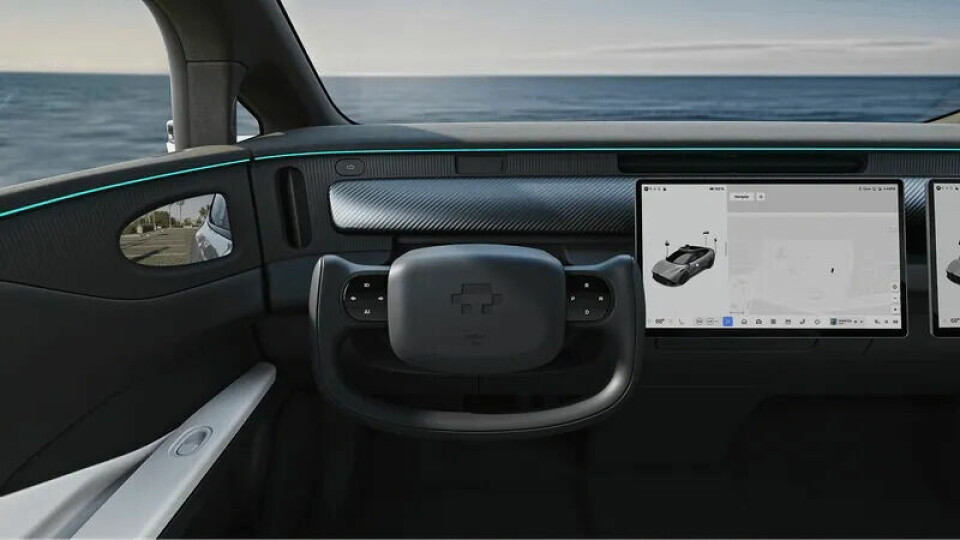

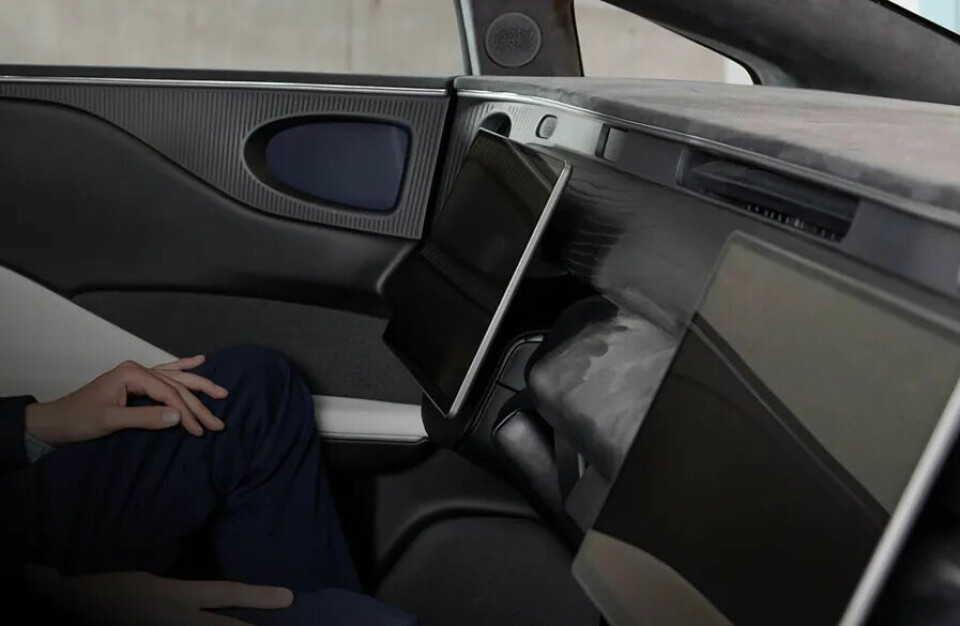

CDN: Can you tell us more about the interior design?
JL: We don’t have a central console inside the vehicle as we wanted to have a lot of space. We also wanted people to be able to move inside the car without going around the vehicle externally [to switch between autonomous driving modes].
The retractable steering wheel and pedals are key. When the vehicle is in Level 4, the steering wheel can move quite significantly, and for safety reasons, these robotaxis have to apply a very strong torque on the steering wheel so no human can physically disengage it. Because of this force, no-one can sit in the driver’s seat while it’s operating as it’s not safe. So, we thought how can we have both [the driver’s seat able to be utilised and a safe cockpit]? I think the retractable steering wheel is probably the only way.
As for the interior finish, we’ve kept everything very simple – black and white. There’s a lot of restraint. It’s still friendly, but in a quiet luxury way.
Read more coverage of autonomous vehicles here.