Unpacking the Alfa-Maserati partnership that is Bottegafuoriserie

What exactly is Stellantis' new venture, Bottegafuoriserie? We caught up with its leadership duo Camilla Rostagno, head of Bottega and Davide Baldini, head of Fuoriserie to find out
A curious press release landed in our mailbox towards the end of last year which appeared to signal some kind of partnership between two iconic Italian marques. And not only for new projects, but restoration and motorsport as well. Bringing Alfa Romeo and Maserati closer together with a shared pursuit was indeed an exciting proposition, but from first skim of the announcement we were still left a little unsure of what this was really all about.
You will forgive us for feeling a little bemused by expressions such as: "a new hub of automotive excellence [...] bringing together the wealth of legacies and forward-looking visions," and "standing at the intersection of tradition and innovation, where passion, craftsmanship, technology and meticulous attention to detail are not just values, they are a way of life."

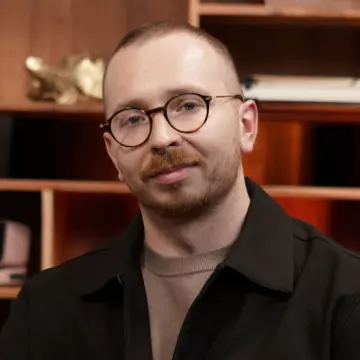
As luck would have it, we managed to find time to chat with the two stewards of Bottega and Fuoriserie during this year's Retromobile. From an incredibly humid Alfa Romeo stand, Camilla Rostagno and Davide Baldini, head of Bottega and Fuoriserie respectively, took the time to walk us through the landmark arrangement.
Car Design News: We were certainly interested to hear about Bottegafuoriserie. What is it all about?
Camila Rostagno: It's the choice of bringing the excellence of both brands together. To start with, Bottegafuoriserie has four souls. Two are more linked to actual product development. Two others are more linked to the experiences.
Bottega is the part that takes care of a few brands. Fuoriserie is where there is the ultimate customisation of the production cars. Then we have Corse, who basically translates the innovation from the track into production. And then we have Storia, which collects all our heritage, all the experiences, certifications, historic cars, the museum and so on — it is a very good support of the culture that we have as brands. So those four souls make Bottegafuoriserie.

CDN: Is it an even split, or does one element have more control than the other?
CR: We are really a 50-50 partnership between the two brands (Alfa Romeo and Maserati) and we try to leverage the best that we have to bring the brands to the next adventure. So with Bottega we have, as of now, two examples of our 'few offs': the Alfa Romeo 33 Stradale — and from your smile I guess you've seen it! — and for Maserati we have the MCXtrema. Two different concepts, but there is a shared spirit that unites them. With both it is very much about attention to details, to the craftsmanship, to the performance and to the client. The client is at the centre for the whole department.
CDN: So that's Bottega, what about Fuoriserie?
Davide Baldini: The product terrain that we have today is Grecale, Gran Turismo, Gran Cabrio, MCPura, 33 Stradale of course, which for some colour and trims ideas we support. With the MCXtrema you see here [on the stand] in terms of colour and trim it was designed by the same team that is working with me in Centrostile.

In the last three years we have increased the product offer in terms of trims, external colour, interiors, rims. For example we celebrated the GranCabrio Meccanica Lirica which was 110% customised by Fuoriserie and new content. The two external colours were brand new, the rims were new, all the badges in gold were new. Trimming the interiors in Alcantara for the first time too. So
But what's interesting about Fuoriserie is that it is not only a product topic. There are three main aims. One is relative to marketing, the second is the product, and the third and most important is the customer part. Normally when we are displaying a new car, or a new configuration — for example, MCPura last year in Goodwood — we are always preparing and displaying the car in a way that excites our customers. We invite interested customers to Modena too, organise drives and even involve racing drivers so they can truly experience the car.
CDN: So it's all about celebrating your heritage and bringing that into the experience. You don't just go on the website and buy a car, you experience the history of the brand during that process?
DB: Exactly. We start by giving the customer the factory, speaking not only about the structure but about the story of the brand. We go through the archives, we try to also see the engine production and testing area. Based on the interest of the customer, we can enlarge or reduce that exposure so the customer really understands our values, our story, our heritage.
CDN: How closely do you and your teams work with the respective heads of design in Klaus Busse and Alejandro Mesonero-Romanos? Weekly, daily?
CR: Maybe not daily, but very, very closely!

CDN: Is anything off the table, or is every idea a good idea? Will you ever say no to a customer request that is a little too 'out there'?
CR: Well, it's not that everything is allowed, but most of the time when the customer arrives, they already have an idea that falls into the brand's values and ideas. There has never been such an extreme idea that we had to evaluate, or in some way carefully manage.
We want the cars to be the car of their dreams, but they still need to be an Alfa Romeo or a Maserati. We need to stay faithful to the brand values of the brand DNA, so in case there is something that is really new, which has happened, we have a committee internally that evaluates the request. We look for historical meaning or references and so on and evaluate whether it is a go or no go. But honestly, I don't remember having a 'no go' on anything.
CDN: Do you have dedicated designers that only work for Bottega?
CR: We have some dedicated designers that only work for Bottega. As we have some dedicated people in the product team and engineering. And then we leverage the strength of the teams have. So depending on the timing, on the chance, on the topic, we have the support of other teams that come to us. But yes, we do have dedicated teams.
CDN: Is that CMF mainly?
CR: Not only CMF, but yes the majority.

DB: I think the difference is that for Camila there is also body and trim, whereas for me — Fuoriserie — it is only colour and trim.
CR: We also have dedicated people for the customer relations. It's a good joint team effort.
CDN: Is there a model from your heritage, a classic that you really love? Something that stands out to you?
CR: Oh my gosh. I mean, it's really tough to choose. There are so many, anything from the 33 Stradale concepts -- you know that from the base of the 33 there were so many different variants like the Carabo, the Iguana, the Duetto, which is another very good model. So I cannot choose, but if I had to be put in the position of doing that, I would say the 33 Stradale.
DB: There are so many. Two years ago we launched a special series, MC20 Icona and Legenda, that was inspired on MC12.