Fastback EV
Xpeng banks on fastback for Europe

Xpeng has revealed its new P7+ for Europe, a sweeping fastback tourer on the outside with the interior of a tech-savvy premium family estate. CDN spoke to head of creative design Rafik Ferrag at Xpeng HQ
Xpeng is one of China’s youngest car brands, formed in 2014 when its founders came up with the idea to create a new car company in a garage at university. Things moved quickly and in 2018 it launched its first production model, the G3 SUV, but it was the P7 saloon that really showcased the company’s design philosophy when it was launched in 2020.
The brand bills itself as a tech company that makes cars, and one that also puts design at the centre of everything, as JuanMa López explained to our editor-in-chief a few months ago. Even in its early days, the philosophy of prioritising design was what lured Rafik Ferrag away from Honda to design the Xpeng P7.


That first P7 has now evolved to become a range of models, although the range is somewhat confusing. China has a P7+, but it is being replaced by the Next P7. The new P7+ is not the next P7, instead it is a model heading to the UK and Europe this year. Xpeng already has its G6 SUV in the region, but the P7+ is expected to really mark the brand’s serious entry into the market, something that has been driving the design team for the past year.
“The first P7 was a pure designer's dream,” says Ferrag. “I was lucky enough to be in a team where there were not many people — led by He Xiaopeng himself — and his first intention was to create something that would make an impact in the industry. That was the first goal of the P7, to create an impact and make an impression and for me, that was the best brief I can get as a designer.”
Advertisement
In the first P7, Ferrag wanted to avoid the trend of side profile under-cuts and features that were there simply to try and make something look sporty and attractive. He wanted genuine minimalism that reflected the fact that the P7 was a smart EV for a younger generation interested more in being connected than having a car that looks sporty.
“The idea was to create an object, a car that would portray honesty,” he says. “If you don't need a feature line, then don't just put a feature line and that's where the simplicity of the P7 came in with its shape and unique graphics.”
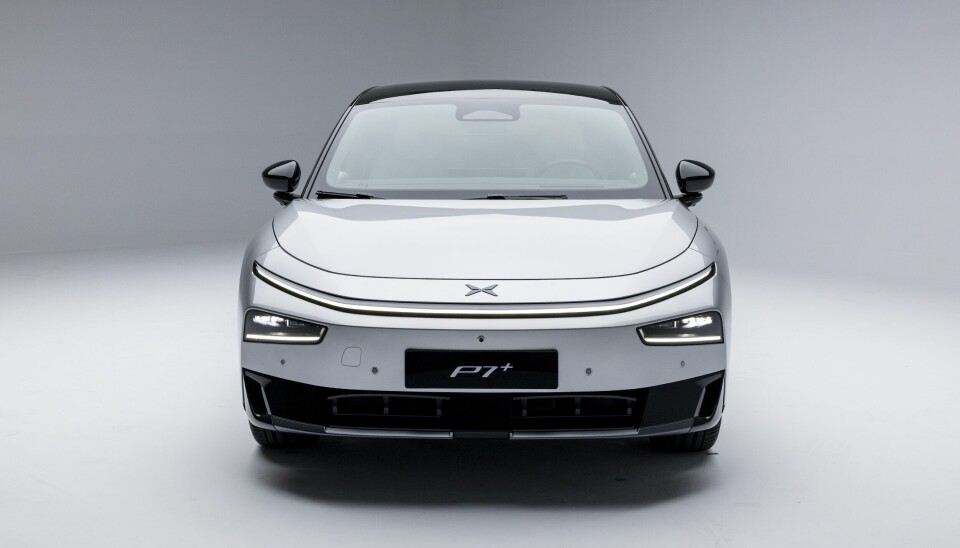
One of those unique graphics was the crossblade lamp on the front, the P7 being one of the first cars to feature this, even before Tesla and Volkswagen. Ferrag wanted simplicity but at the same time a uniqueness that would differentiate Xpeng from everyone else.
That was especially true when launching a new brand at a time when some Chinese automakers were still copying, or at least inspired by other designs.
“I'm not coming from an industry of copying designs”, he says. “I studied in France, had my first experience in Citroen, and then I moved from Japan to Honda before coming here and so it's actually the opposite. I believe that if Xpeng is successful today it's partially because of the unique design and a direction that clearly set the tone that Xpeng is not copying anyone. We are even trying to inspire European brands which is my goal.
“For the European market," he continues, "when it comes to shapes, we are not trying to see what customers today are waiting for, we’re trying to put out something that will dictate what the next generation will like. This is our aim in styling and in design.”
Where the next P7 is for younger, more energetic customers, more of a driver’s car, Ferrag sees the P7+ as being family or business oriented, an intelligent tourer fastback focused on space and comfort. It could be seen as a facelift of the P7+ that has been on sale in China for the past couple of years, but he describes it more as a “techlift”, with more intelligence.
There are lots of design changes though, reflecting the evolution of the P7 while at the same time reinventing typologies and creating key signature elements in lighting and CMF.
Advertisement
Xpeng describes the P7+ as having a “mid-engined, supercar-like stance”, although of course it doesn’t have an engine, instead the choice of single or dual electric motors. The front features a shark nose inspiration, a popular look of course that is dictated by aerodynamics. Even so, the team have tried to create that unique identity with the continuation of the light bar that elegantly curves into the fenders.
"In design we are still pushing for this uniqueness, but the more we grow, the more challenging this will be. As long as I'm here, I'll fight for it"
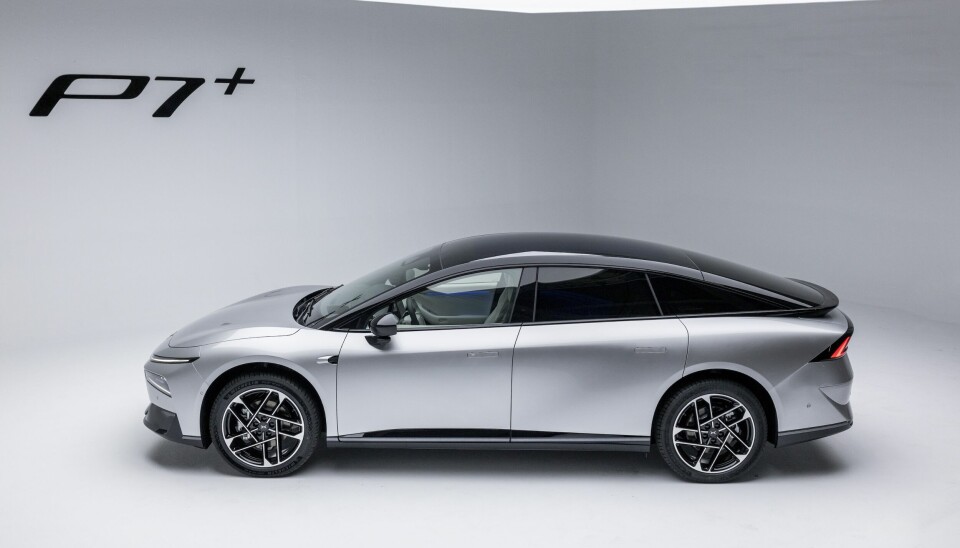
The cabin has been pushed forward on a body that is lower and wider, with a minimalist look to the side profile, along with surface tensions that enhance its dynamic appearance and a floating roof that flows into a more elongated tail. That rear features a ducktail above the belt line, surrounded by elegant curves, reminiscent of the Citroen C6. This is an observation that Ferrag sees as a compliment, because the C6 remains one of his favourite cars.
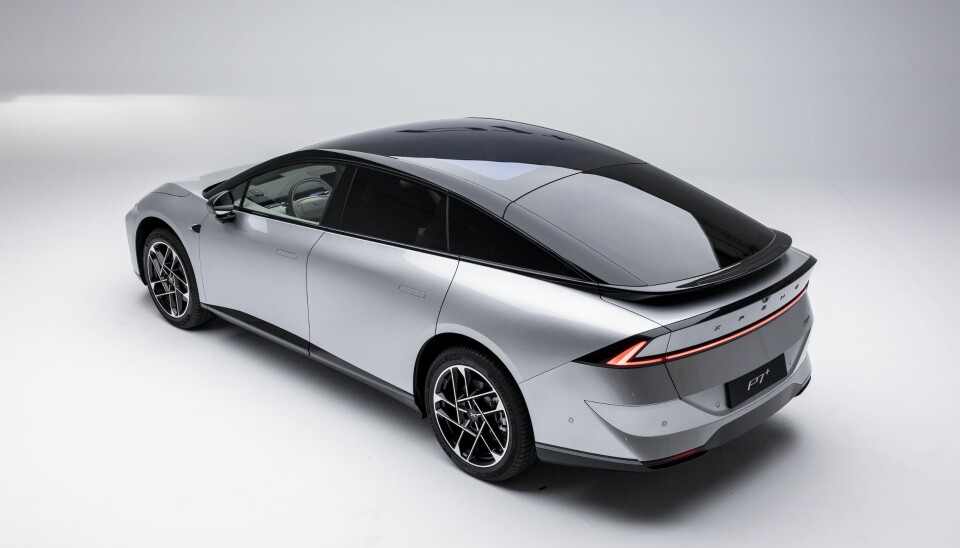
The fastback design incorporates a tailgate that is said to open as high as that on an SUV, revealing an incredibly spacious boot that offers more luggage space than estate rivals such as the Audi A6 E-Tron Avant or Volkswagen ID.7 Tourer. Space is very much a key theme of the new P7+, made possible by its 5,071mm length and 3,000mm wheelbase. This means almost a metre of rear seat legroom, further emphasising the Chinese focus on back seat space and comfort.
The interior is all about soft forms and a sense that the environment is suspended in the sky. That’s probably marketing speak, but from the IP to the seats, there is a feeling that everything is not only floating, but immersive and inviting. The lines of the IP all flow perfectly around the cabin, enhanced by ambient lighting and over 30 discrete storage spaces.


When it comes to screens, there’s a nicely integrated narrow 8.8-inch one for the instrumentation, an 8-inch touchscreen for those in the back seats and then the main infotainment screen, measuring 15.6 inches. There are some buttons on the steering wheel, but most of the functions are contained in this screen, from climate control to driving modes and of course, an AI assistant. The layout works well, with options to personalise tiles and add favourites to buttons on the steering wheel, although more buttons or dials for things like climate control would still be welcome.
It all looks and feels luxurious, reflecting a genuine commitment to design from the top down. From visiting the Guangzhou Auto Show, there are still some automakers in China that are followers rather than leaders, but Xpeng is not one of them. Even its shareholder, Volkswagen, could take a few ideas from what Ferrag and the rest of the 100-strong design team are doing. That’s exactly what he would like to see happen of course, but now his challenge is to maintain the momentum, to keep unique design at the centre of Xpeng’s strategy.
“In design we are still pushing for this uniqueness, but I would say, the more we grow, the more challenging this will be,” he says. “But as long as I'm here, I'm gonna keep fighting for it.”
Advertisement