Digital tools
Andrea Mocellin: "You need to rely on your instincts"

The multi-disciplinary designer shares an insight into his go-to tools, and which newer solutions show promise
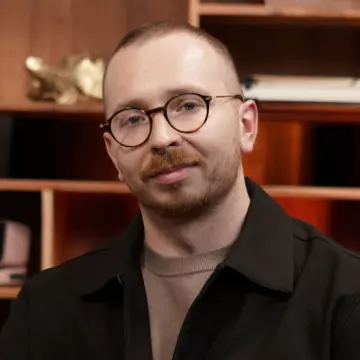
For some, a career in car design is more than enough. But for Andrea Mocellin, the call from other worlds in product, aviation and mobility design were too loud to ignore and he has since developed a rather broad portfolio as an independent operator.
More recently, the name Mocellin might ring a few bells following his project with Bertone to revive the Runabout two-seater as a modern, genuinely usable sportscar. From four wheels, to two — and none at all — the Italian designer sat down with Car Design News at the 2026 edition of CDE to give an insight into his workflow and 'daily drivers' from a tool standpoint.
Car Design News: I imagine you have a core set of 'go to' tools. Could you walk us through the things you're using day to day?
Andrea Mocellin: It's quite a good question because that make me reflect on that as well. Sometimes in the rush of a project, you never really analyse everything. To start with, it's worth noting that I grew up in Italy and consider Pininfarina — and Lowie Vermeersch — as my mentor in terms of design process.
CDN: Who is now with Granstudio of course.
AM: Yes, and I worked there for four years as chief designer back then (2014-2018). Lowie always taught me that clarity at the end is the most important message you can bring as designer. So I learned from him that you have to be extremely good in sketching ideas because you never know much time you have to explore that concept and how well you can execute it.
So, what I try to do now, especially with small- and mid-sized companies — which I love to collaborate with alongside start-ups as well — is remember that you may not have the chance to bring the rendering quality you need in automotive to show CEO. So, it's about hand sketches and quick 3D models just to give the 'embryo' feeling of what is burning as a design. And I think that you can really challenge that [how things are presented]. But most importantly, I try not to be contaminated by the trend of AI.
CDN: Interesting, please continue...
AM: Well, for example, when it comes to photorealism. AI is progressing so quickly that in three weeks it might look old at the eyes of the industry. If you think about the lifetime of a car or an aircraft, we speak about almost 20 years. I don't want someone to look at the vehicle I've designed in 20 years and say it looks like it was made with a previous generation of AI. So I think it's really important to understand the timeless connection you can bring into the industry, and which technique you can use to transmit that.
CDN: And those techniques are?
AM: I think there are the key elements that always have to be in the presentation, the storytelling, which have to be human. And then there is the rest: intermediate presentations just to show quick photorealistic feelings of the product, for example. But they don't need to be the protagonist of the process.
There are so many tools to master; you need to use your heart to connect them
I wish there would be more chances to speak with CEOs as a designer because they are the ones tasked with selling the product and advocating the mission of the company. The designer should be able to communicate an idea with them and create a clean story that stays fresh, immediate and clear until the end. It's not easy to define [the design process] but I'm in love with the human instinct of creating by hand.
CDN: Right. So you're very much a hands on designer, but you will inevitably be using Blender and software like that?
AM: Of course. You have to learn those digital tools, there is no way around it. The level of execution for surfacing you can achieve through those tools is incredible. And for parametrics, Grasshopper is a must have.
CDN: Which tools are evolving quickly?
AM: Well, I was speaking with Vizcom and it's moving so fast for them and who knows how much it will have evolved in six months time — we don't know what is going to happen. But that's what I was mentioning earlier — if you rely only on that tool, in a month's time your design boss or VP of product might tell you the design looks a little bit old.
CDN: Things are changing quickly that's for sure.
AM: But you know, for me the separation between what is new and what is old is all about the instinct of the human being. That defines how you bring the innovation, and it's kind of a journey that I try to protect. But at the end of the day I like to think about the design process as a book that you are proud to look at whether you are holding it in front of a chairman or telling the story to your nephew. You need to love new things and try to experiment, and there are so many tools that you have to master; you need to find your heart to connect those tools to make it unique.
Editor's note: Car Design News spoke with Mocellin on a much broader range of topics. Look out for the full video interview to follow.