Digital tools
The state of automotive digital tools in 2026
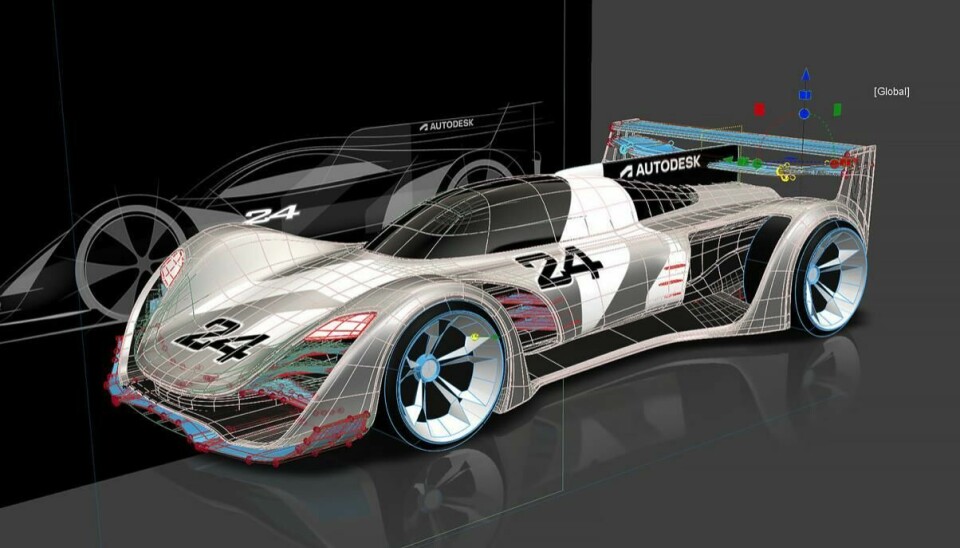
March saw the CDN team dig into digital tools – from the top tools in designers’ toolboxes to the impact of these tools on workflow and speed…
Delving into the designer’s toolbox a handful of themes have presented themselves – some expected, some not.
A string that seemed to run through all conversations was the performance of digital solutions that continue to form the backbone of the creative process. This was reinforced by Genesis’ John Krsteski, who says designers have ultimately been ‘empowered’ by contemporary design tools in a way that previous generations were not.
At Pagani, advanced design manager Alberto Piccolo is of a similar opinion but cautioned that the fundamental hand tools have not gone anywhere. And for good reason. “Today, students have access to a lot of new tools, like AI or whatever, but you can never settle on the easy side of that, because a good result is always made by your mind,” he explains. Piccolo goes as far to say that a strong idea beats a flawless drawing, and designers should sharpen their mind as well as their pencils.

Regardless, digital tools continue to shorten the design process. It is partly why the ‘China speed’ phenomenon has grown not only in China, but beyond. Indeed, even European studios have made efforts (conscious or not) to mirror that way of working, and Stefan Sielaff – who has a foot in both pools so to speak – says that the notion of China speed is no longer the novelty it once was. “It’s old news,” he told CDN during a visit to Gothenburg.
But talk is cheap, and the proof is in the pudding. A strong recent example can be seen in the Sino-European project between Volkswagen and Xpeng, where digital tools enabled a ‘round-the-clock’ working process. But do not fret – there is no need to get the unions involved for overworking. The idea is that when the team in China clocks off for the day, the team in Europe can take up the baton. Almost like a relay race. And a race it was – the design process for the ID.Unyx 08 was completed in less than a year, and series production in two years.
“We were faced with a challenge but turned it into an advantage,” says Frank Bruese, head of exterior design for VW-Anhui, who is based in Wolfsburg. “We would work during the day and share our design data with VCTC in the evening. While we logged off, they would log on and evaluate the data, and we could all catch up when those shifts crossed over. This automatically cut 50% of the development time without any compromise in design quality.”

For all the digital tools on offer – many of which are invaluable and ‘unavoidable’ according to Andrea Mocellin – designers should avoid becoming overly reliant on the latest new software. And particularly with AI. “If you rely only on that [new] tool, in a month's time your design might looks a little old. But the separation between what is new and what is old is all about the instinct of the human being.”
And while not a ‘tool’ per se, there is a suggestion that designers should broaden their horizons more generally and experience other elements of the organisation beyond the creative studio. “If I were younger, I would encourage anyone who has the opportunity to take a sidestep to do so,” said Lamborghini’s Mitja Borkert. “Maybe do a job rotation: spend a year in product planning, a year in finance, or perhaps in production.”
As always, the toolbox will expand and contract as new things show promise and certain solutions fall out of favour. One thing designers should always be able to fall back on is their creative energy, willingness to try new things and as Andrea Mocellin puts it, rely on “human instinct” for what makes sense.
CDN's theme for April is CMF and new materials – so keep your eyes peeled for that.