A GM stalwart (and thinker) retires
Andrew Smith: "Advanced designers need to be comfortable with ambiguity"

As he retires after 35 years at General Motors, executive director of advanced design Andrew Smith reflects on his beginnings at Holden, the Cadillac Lyriq and Escala, questioning convention, AI, and the importance of pattern recognition
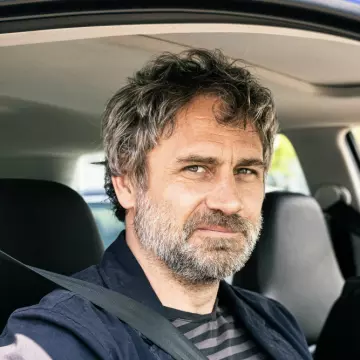
Over more than four decades at General Motors, Andrew Smith has helped shape everything from Holden icons and Chevrolet concepts to the new generation of Cadillac electric vehicles. Along the way he has overseen programmes including the Buick Avista, Chevrolet Mi-ray, Cadillac Escala and Lyriq, while championing an approach to advanced design rooted as much in curiosity and collaboration as aesthetics.
As Smith prepares to retire, he sits down with Car Design News to discuss the projects that defined his career, why simplicity remains one of design's greatest strengths, what AI means for the creative process, and why the role of advanced design is not to predict the future, but to ask the questions everyone else has overlooked.
Car Design News: What advice would you give to a young designer entering advanced design today?
Andrew Smith: I'd say an analytical mindset. Someone who's willing to open their eyes and assume that what they think is real may not actually be real. Someone who's prepared to question what they think is right.

They also need to be comfortable with ambiguity. And they need to be able to recognise patterns, even when those patterns aren't immediately obvious.
Certainly the Sandman is a soft spot for me, obviously, being Australian. It was such a fun project because it just came out of nowhere
You start asking yourself, am I noticing this because it's genuinely happening, or because the algorithm on my phone is showing it to me?
You begin to see lots of little things happening. What does that actually mean? It's about having the mindset of always wanting to know more.
CDN: Was that your particular skill?
AS: I think it's actually my collaboration. The fact that I can walk into a room and make people feel comfortable enough to tell me what they want to do or what they're trying to achieve, and then help them achieve it — whether it be designers, engineers, marketing or whoever.
I'm also kind of naïve in my approach. I come in and say, "Okay, what are we trying to do?" I always bring it back to the simple question: What is this going to be for the customer?
Is it going to be positive? Is it going to be negative? Is it going to help the brand? We had another review in the Dome that was about what makes a Cadillac a Cadillac.

It was me and Brandon Vivian, who was the executive chief engineer for Lyriq at the time. He and I were just partners. We did everything together. It used to shock people. I'd walk into a meeting and say something, then look at Brandon and he'd say, "Yeah, listen to what he said."
CDN: Are there concepts that are special for particular reasons when you look back?
AS: Certainly the Sandman has a soft spot for me, obviously, being Australian. It was such a fun project because it just came out of nowhere.
I was driving a ute at the time — a vehicle I absolutely loved — and I made a sketch of a panel-van version as a modern Sandman.
The idea was basically a sporty exterior and a basic interior. You'd take it and use it as a canvas to do whatever you wanted. Someone said, "You should make a model of it." So I did a model. The next thing I knew we were doing it as a show car.
I got a bunch of people together who were really capable of doing it. Mambo was one of them — the Australian art collective and clothing brand. We worked with some students and the whole thing just came together.
Watching people's response to that vehicle was amazing. It really was one of those thoughtful moments where you realised, this is Australia perfectly captured.
I like simple cars that make a really strong statement
Peter Hanenberger was the VP in Australia at the time, and he was really keen to take the Commodore architecture and create more variants from it from a manufacturing perspective.

So he was like, "Yeah, let's do it." We did the Cross8, the Crewman, the one-tonner, the Coupe concept, which obviously became the Monaro, and then we had the GTO.
CDN: Were there other projects that bookmarked your career?
AS: Yes. I think the Mi-ray is probably the next one, which was the Chevrolet concept we did in Korea.
The reason I think that one's really cool is because it was a real rule-breaker. The Korean team were very keen to do what they thought they were supposed to do, and I was like, "No, let's just do what you want."
I put it in front of Ed Welburn. He liked it. Then I put it in front of Mary Barra. She liked it. So we did it
So we convinced everyone we were going to do a vision of the next-generation Spark. In the end, the wheelbase was about the only thing that stayed the same. Everything else was different.
It was mid-engined. It was almost like a rally car in its proportions — very wide track, almost square in its stance.
The car itself was great. I think it was really creative. The team did a fantastic job, and I thought it fitted really well with Chevrolet's ethos at the time. It also helped launch the brand in Korea, so that was fun.

CDN: One of my favourites was Buick Avista.
AS: When I first came into Buick, they had a scale model of that car sitting in the studio. The two designers said, "We'd really like to do this as a concept." I wasn't sure it was the right time, but we developed it anyway. It looked really good.
Everybody thought photographers were going to lose their jobs when Photoshop came out. They didn't. It just became another tool. I think AI is exactly the same. I don't think it's going to replace designers
So I put it in front of Ed Welburn. He liked it. Then I put it in front of Mary Barra. She liked it. So we did it. I like simple cars that make a really strong statement. Simplicity has always been a really important design principle for me.

Then from there it was the Cadillacs, which were obviously a lot of fun. Escala was actually a huge project. It was really, really important because it defined so much of what we did with Cadillac moving forward.
I remember unveiling it at Pebble Beach. It was the first car where we livestreamed the reveal virtually.
Just before I went on stage someone looked at me and said, "There are a million people watching." The follow-up to that was the Expressive Coupé, which we never showed publicly until last year, when it appeared at EyesOn Design.
It's been sitting in the studio for years as a reference vehicle. It really set up the whole Sport and B-series strategy for Cadillac.
CDN: I think central to that electrification of Cadillac was the Lyriq project, which you obviously led. Did you have a sense that you were working on something special?
AS: No, I felt really honoured. I remember being blown away by the interior when I first saw it. You kind of just think, wow. It really was like the 1960s all over again.
I spent a lot of time looking at 1960s Cadillacs because we had the GM Heritage collection there. There were lots of cars I could go and look at. I just remember sitting there thinking, wow, this is a fantastic opportunity, but it's also going to be something that's going to set the direction of the brand for the next twenty years.

I actually remember sitting in the Dome during COVID. We had a show set up and we were sitting there before it started, just looking at all the models and thinking, wow. We had the Dome full of cars. We couldn't even get them all in.
It was one of those moments where you just sit there and pinch yourself, thinking, how did I end up here? How did I get this great opportunity? It was really fantastic.
CDN: You've gone from vellum and marker rendering through digital tools, Photoshop, Alias, virtual development...Was there one technological advancement that really changed everything for you?
AS: Probably Photoshop. I was actually the photographer at Holden as well, because everybody had to wear two hats.
I remember taking photographs of production wagons and digitally removing the rear section, creating images that looked photorealistic really early on. That completely blew my mind. It blew the sculptors' minds as well because they'd ask, "Where's that car?"
I'd say, "There isn't one." They couldn't understand how I'd done it. I still use it today as part of my sketch process.
For a massive industrial organisation like General Motors, Advanced Design is really about saying: "Here's one possible future"
CDN: We're almost on the cusp of another major change now with artificial intelligence. Any predictions about how it should be implemented, or whether it could become another Photoshop moment?
AS: I think it's a bit like when digital cameras first came out.
Everybody thought photographers were going to lose their jobs. They didn't. It just became another tool. I think AI is exactly the same. I don't think it's going to replace designers.

I think it's simply going to give them more options to choose from. That might actually become the challenge — having too many choices.
The way we deal with it internally is that people can use it, provided they're transparent about using it. Where it eventually ends up, though, I honestly don't know.
CDN: Looking at all this, some designers become synonymous with a particular car. A project almost follows them around throughout their career.
AS: I'd be proud if people pointed to Lyriq and said the whole new generation of Cadillacs was Andrew's work. That would make me really happy. To be able to look back and say, okay, I helped do that. I'm not really sure otherwise.
I also did some pretty bad HMI executions on some Holdens that people could remember me for if they wanted to!
I have an overarching fear of handing everything over to computers
CDN: Ha, that leads to my next question: are there ones you'd like struck from the record.
AS: They all got cancelled before they came out... probably.
CDN: How does advanced design evolve to stay relevant?
AS: I think it needs to answer the questions that nobody is asking — or perhaps the questions people are too scared to ask.
It needs to think about the big macro trends shaping the world and then ask what responses we can create. For a massive industrial organisation like General Motors, Advanced Design is really about saying: "Here's one possible future."

Most of what Advanced Design does is actually inward-facing. People probably only ever see a tiny fraction of our work. The Hummer HX that we recently showed publicly is actually a good example. That started life as an internal concept. It wasn't really about Hummer at all. It was about manufacturing processes, circular economy thinking, recyclability and those kinds of ideas.
From a portfolio perspective, it's about asking:
"What's the right portfolio for GM moving forward?"
"What changes are happening in our customers' lives?"
"How do we get ahead of those changes?"
Maybe it's an Australian attitude, but I've always believed in questioning things: the status quo, questioning reality. Asking, "Is this really what I'm seeing? Or is there something deeper going on?"
AS: Around ten years ago everybody was talking about the Internet of Things.
CDN: I remember it well.
AS: Everything was going to become connected. Our response at the time was to think about the opposite. What about disconnection? If everything becomes connected, eventually people are going to want to disconnect. What does that future look like? What's the counter-trend? I actually think the counter-trend is often the really interesting thing to study.
So if we're living through a period of hyper-connectivity, what's it going to feel like when people actively want to disconnect?
What does that mean for the car? How can the vehicle help people relax? How can it reduce their mental load? How can it create the right experience? Ultimately, it always comes back to the customer.
CDN: I remember the Internet of Things being sold as this future where my oven would be talking to me on the drive home. That was ten years ago. I still don't talk to my oven.
AS: I have an overarching fear of handing everything over to computers. I deliberately stop short of connecting everything together. There's just something very human about wanting to remain in control.