Lambo's design boss dislikes potatoes
Don't end up with a "Potato"

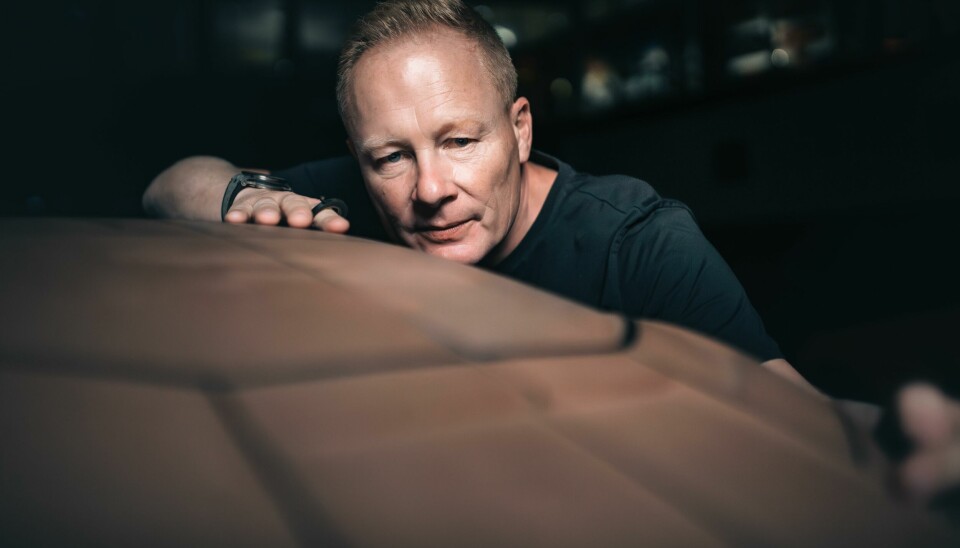
Design supremo at Lamborghini Mitja Borkert talks to Car Design News' James McLachlan about Goodwood FoS, aerodynamics and winning arguments with engineers
Mitja Borkert, Lamborghini’s design chief, spoke with CDN’s James McLachlan at Goodwood Festival of Speed 2025 about the new Temerario GT3 and the fine balance between aesthetics and aerodynamics. He recalls lessons from Porsche that shaped his approach and explains how close collaboration with engineers prevents super sports cars from turning into what he jokingly calls “potatoes”. Borkert also reflects on his journey from East Germany to leading one of Italy’s most iconic design studios.
Car Design News: So first of all, I'm really curious: what's under the cover?
Mitja Borkert: Under the cover is our first race car based on the Temerario GT3.
CDN: How much of the design has been tweaked and changed to make the race car?
MB: A great deal. As a designer and as someone who likes to drive fast cars, I have a lot of understanding for the requirements of design for racing cars that not every designer has. GT3 is the most competitive category of race cars, and here I can bring in all my experience because in Lamborghini every race car is an ambassador of our brand.

Sometimes designers do not fully understand the aerodynamic necessities and requirements. I have a lot of understanding of this. Working on GT3 is like working on our Le Mans Daytona hybrid or the Essenza SCV12. We are still able to put in our design DNA. You will see the rhythm of the Temerario, the hexagon shape, the hexagonal racing lights. But you also have aerodynamic functional working parts like the S-duct in the front, brake air intakes, sizing of the wing and everything. Within those boundaries, it is a very inspiring car.
CDN: Is it hard to continue a design language when aerodynamic requirements become so stringent?
MB: It's possible. Lamborghini's design language is iconic and extremely recognisable, but it is also perfectly made for many different interpretations. You need to understand what is necessary. I believe in a great collaboration between the designer and the aerodynamic engineer – both on production and racing cars. Many times they come up with ideas or possible solutions that open your creativity because you come up with ideas you would not have from a pure design point of view. Sometimes you need slots or air intakes in unusual places, and this guides you.
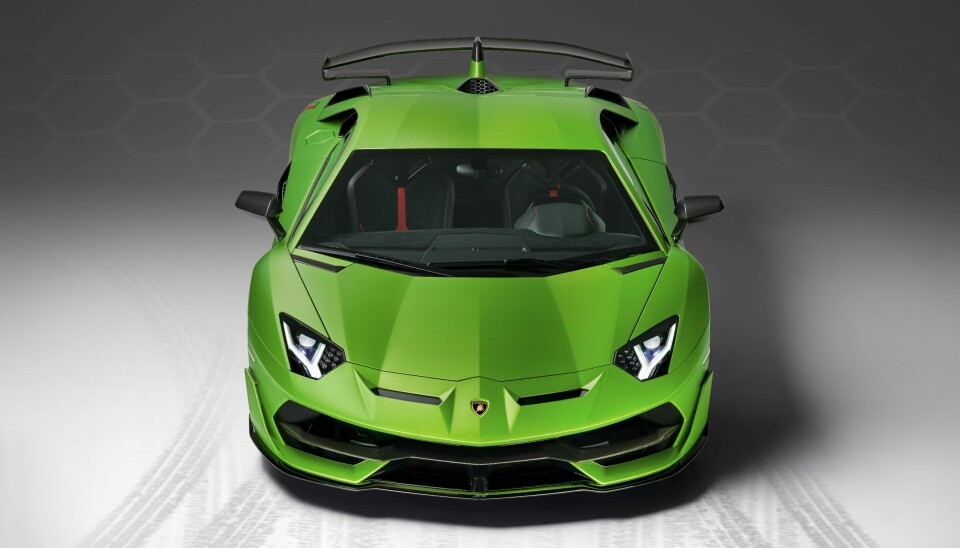
I remember on the Aventador SVJ, the front blades on the cheek were created together with the aerodynamic guys, which took us into interesting territory. On a super sports car, the engine needs thermal air outlets because it gets hot, so you must work with this.
CDN: Where does that engineering understanding come from?
MB: A gut feeling. If the engineer explains something and I understand the topic, I'm able to create something from it. I remember at Porsche the design language was more rounded and softer than it is at Lamborghini. I worked on the Macan and the engineer kept telling me the rear section needed to be edgy – like a Formula 1 wing. I said, yes, but then it’s not a Porsche anymore.

When you plan the shape, airflow needs to stay as long as possible on the surface. You can reach 80% of what they [the engineers] need, but the last 20% can ruin the car — too bulky, too heavy. You need to explain as a designer: if I go out another 5cm it looks wrong.
CDN: Designers have that eye, that sense that going 5–10% in one direction could be too far.
MB: A car starts at the front because it hits the air. The starting point is the cheek and the front. On the Temerario, the hexagon air intakes are not just light units; they are tunnels feeding the radiator. You need to get the front volume right because the cheeks prepare the airflow towards the rear. If too inclined, the air goes out of the car; if too parallel, it looks like a potato.
Catching air into side intakes is difficult. On the Countach project we did a NACA side air intake and it was a challenge to get air in while keeping the puristic design. Air floats around the front fender and you need to treat it so that the air does a corkscrew movement into the body side or upper part. Millimetres count.

CDN: What design tools do you use to calculate that? Or must it be the wind tunnel?
MB: The engineers use computer-aided simulations to calculate airflow around the car. They take the model and make several loops of investigations. Instead of always going to the wind tunnel, you can reach 80 or 90% already. We always use the wind tunnel after. At Porsche we always went to the wind tunnel with clay models, adding wax, clay or aluminium pieces to test ideas. Going to the wind tunnel gives experience and lets you keep control. If you add 2cm on the rear or 1cm on the front you still control the design.
CDN: How do you feel about the evolution of interiors for Lamborghini?
MB: Interior design is a personal journey. I am a natural-born exterior designer, but over the years with the team we created the new interior design DNA of Lamborghini. I drove Aventadors a lot. I took Lamborghinis to meetings whenever possible — Berlin, Leipzig, Stuttgart. I like driving, and you can see that in the interiors. You have all the buttons and ergonomics.

I noticed in the Aventador there was not a single space for even a credit card. When you drive a Lamborghini you may have sunglasses, an iPhone, gloves, a wallet. In the Temerario and Revuelto we have space everywhere. Functionality combined with cool design. Feeling like a pilot requires perfect ergonomics and roominess. The car is now so spacious most customers can wear a helmet for the track. It does not mean you cannot have a stunning exterior.
CDN: And yourself? As someone who loves to sketch, Lamborghini always seems like your dream job.
MB: Life is a gift. I was born in East Germany. There were not many cars. Owning a Lamborghini today makes me proud. After the wall came down I wanted to be a designer. I pushed myself to be better. I worked for Harm Lagaay and then Michael Mauer at Porsche. Porsche will always be in my heart, but now I'm at Lamborghini and I am living the dream.
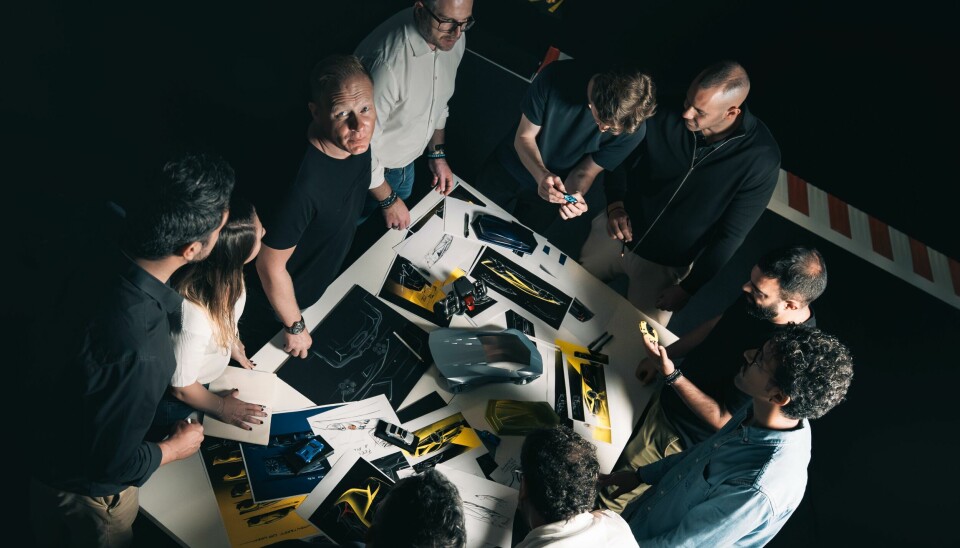
CDN: A lad from East Germany heading an iconic Italian brand. Does your background bring something new?
MB: Design is international. When I joined as an intern there were people from everywhere. An outside perspective gives a more holistic view because you appreciate the culture and brand even more. Sometimes the foreign designer creates the better things. In the end it's about talent and attitude.
I do not feel like a German. I have been away from my hometown since 1994. Now I live in Modena, my son's childhood is in Modena. I worked in Stuttgart, in Huntington Beach. Designers are empathic and inhale the culture of the brand. Sometimes journalists stereotype, but the design community is open.