Beijing Motor Show 2026
GAC design boss: “Nobody's really willing step forward with something radically different”
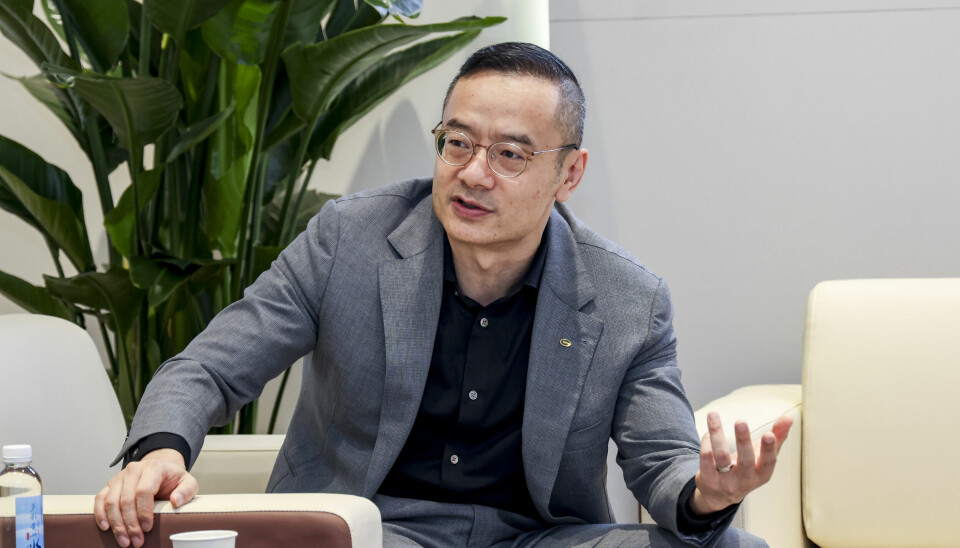
GAC's global design chief spoke to CDN about standing out, countering homogeneity and balancing shock and awe tactics with products that genuinely resonate with customers at home and on the global stage

Ahead of a jam-packed schedule on the opening day of the Beijing Motor Show, CDN sat down with GAC’s design chief Fan Zhang to get a sense of where the brand is going, but also to pick apart some broader industry trends.
Eloquent and forthcoming as ever, the Guangzhou-based chief design officer and former Mercedes man touched on the prickly subject of homogeneity in the Chinese market – something that was indeed evident across the show to some degree – but also explained how he is carefully leading GAC into more exciting waters without alienating more reserved customers.
Car Design News: China Speed seems to be in full flow. How does it feel for you as a design leader at the moment?
Fan Zhang: There is such severe competition from of all of the OEMs. There are so many players in this game, and everyone is looking for an opportunity to attract their customers’ attention, to find something extra that makes their product more attractive and become a talking point.
CDN: You want to stand out.
FZ: Yes, and opportunities to catch their attention are becoming quite rare. Customers have such a wide variety of options but they are also facing the dilemma where, although there are so many products to choose from, style wise they are becoming quite generic across the market. I think customers are calling for more individuality, more expression to their own character, rather than everything looking the same.

CDN: I recall last year in Shanghai you spoke about this trend around homogeneity. What are you doing at GAC to ensure you don't blend in with the crowd?
FZ: We need to be careful with that. On one side, of course we eventually want to stand out, but at the same time you don't want to polarise your customers. You don't want to become alien to the mainstream opinion. There is an appreciation for a certain type of aesthetic, which is part of the struggle right now for all designers.
Everybody's calling for something new, but nobody's really willing to step forward and make something radically different. This is true even for us, honestly, but we are carefully trying to introduce some new ideas and new form languages.
CDN: Anything to that effect here in Beijing?

FZ: Yes, we do have two cars I’m particularly proud of in that respect. The N60 [minivan] has a very holistic design with a form language that reflects the philosophy for something simple yet strong, interesting but not complicated. It's very easy to recognise from the silhouette, it's more like a monobox, while from front view it’s easy to remember these two horizontal stripes – the same with the rear lamps too.
There's another feature on the side: the D pillar rises up almost like a small hill. In combination it makes the car very special, but still fits with the overall trends. We wanted to make something that has a little bit of our own flavour, and something that is, in my opinion, cooler.

CDN: I'm seeing a lot of personalised tail lamps here, from floating hearts and animated animals to other digital flourishes. Is that something that you're looking to do as well?
FZ: Yeah, we have done something like that with the S600 which uses digital pixels to animate all kinds of graphics and patterns to show your personality. This is like a party trick to attract the customer's interest or attract people's attention on the road, but I think at a certain point, when you consider the opportunities for everyday use, it's probably not that practical or attractive to people.
CDN: I wonder if in five or 10 years’ time it may look a little dated.
FZ: But this is the trick – all the OEMs are really scratching their head to come up with something new. And once there's a new technology, we want to adopt it. Once there's a new kind of way of expressing design, we want to try to try it. So there's no shyness here in Chinese car industry to try new things, to try new ideas, but the challenge is finding those new ideas.


CDN: Do you think Chinese design in general has shifted in recent years? In certain ways this market may be leading trends rather than following them as it may have done in the past. Do you agree with that?
FZ: Yeah, I do. You don’t really see the latest products coming from Europe or from America, Japan or Korea. You feel the gap and all the Chinese models are in their own way developing more and more towards certain modes of how the car should be. For example, no matter how cheap the car is, the interior is always full of soft touch, good quality materials and feels very spacious and comfy.
In Europe, most people would rather just go for something more practical, more functional and plasticky – it's okay as long as it does the job. But in China if it looks cheap, customers don’t want it.

CDN: So you see a defined cultural split there with the perception of the interior.
FZ: Yeah, I think customer expectations are different and this is pushing the Chinese car industry to become more and more extreme in a way.
CDN: GAC is on a global stage now and, as you say, is trying new things. Not completely shocking the market, but certainly looking to stand out. Is it an exciting time to be a design leader, is it fun even?
FZ: I wish I could say that. But the reality is very challenging because the level of competition is insane. I would say that, no matter how big their sales volume is, everyone in China is competing for survival. Even though we have made some progress both domestically and also on the global stage, we are still relatively small, so we have to catch up, we have to be more successful, and we have to sell more cars. It’s as simple as that. We cannot just relax and experience too much fun in the work, at the moment it is rather more about feeling the pressure and anxiety, honestly speaking.
CDN: That makes sense.

FZ: But let me be clear: because of the pressure, it gives us the drive to find ways of getting an edge over the competition. Because you cannot simply follow others. You have to create your own character and a special point of appeal from your product.
To this end, we created products like the Aion N60 [mentioned earlier] and also the YUE7. This is an off-roader, which fits very well into a product segment everyone is developing, so while we are trying to fit in we are also trying to stand out. First things first, we had to make sure it looks like a proper off roader – from the proportion from the form language – and ensure it is boxy, geometrical and with an upright stance. It looks rugged.


CDN: We often see brands touting a rugged SUV, but it comes with a fast roofline, smooth body sides and luxury wheels...
FZ: And that's fake. Those kind of cars didn't even pass the first test, let's say. With the YUE7, we took that genuine off-road foundation and added a ‘cyber’ element into the car. It's more like a rugged car you could see from the future. The lamps have a cube-like shape, and we tried take more of a more holistic design approach where the exterior and interior cues line up. By doing that, your character is more distinguished than the others and I think this blend of traditional ruggedness with cyber elements is a new approach that could give us a special edge.
CDN: Are Chinese brands still benchmarking against Western marques?
FZ: Of course, this is a basic task for us as designers. But we don’t benchmark against the European new products like we used to. Before, the Chinese OEMs were the followers – taking some classic form language from say Porsche, Mercedes, Landover. But this has been overly used by a lot of Chinese companies in different ways.


I went to Munich last year and we saw the new launch of Audi and also the BMW i3, which had pretty daring new design approaches. We considered this and whether that kind of approach would work for Chinese mainstream markets. Europeans are either too conservative or take quite huge leaps forward. What we need [in China] is something in between. Not too conventional, but not too adventurous.
So while I truly respect what brands like Audi and BMW are trying, in China customers have a different mentality. In that respect, we benchmark more from the customer’s point of view, closely watching their reaction to each new launch in China, how those cars are reviewed and then of course, how they sell.
CDN: That's always a good indication.
FZ: It is, but there is still kind of a mystery around this. Sometimes you feel there is a really good design but it doesn’t sell well. And sometimes the opposite.