Kaban's visions
Jozef Kaban: "We need to be the light for the whole system, not just design"

SAIC design VP and self-described life optimist Jozef Kaban explains why strong leadership still matters in a flatter creative culture, failure and design heroes

During the UK launch of the MG4 Urban, Car Design News’ editor-in-chief, sat down with SAIC’s Jozef Kaban for an off-the-cuff interview. Kaban was in typically freewheeling form, happy to talk about everything from art and architecture to leadership and failure.
CDN: In your presentation, you mentioned art as an inspiration, is there an artist or movement that interests you?
Jozef Kaban: The main artist I’m interested in is my wife, because she’s a jewellery designer. In our house, it feels like an atelier. Sketches everywhere, materials everywhere. I’ve always seen jewellery as a huge influence on my thinking. Because jewellery is perfect from every side. There’s no “backside” of something.
I like that philosophy, of seeing things not just as a cover but as something deeper, going through the material, even to the other side. Even when working on projects, I wasn’t only looking at the “car” as a car, but sometimes as a graphic, or a piece of sculpture, or a mix of everything.

Yesterday we mentioned Van Gogh. A great artist, but his life was hard. All that pain and pressure and energy transformed into something for humanity – a part of what humanity values.
The designer and the vision are very important. But is it enough? Maybe not. A designer also needs someone above them who understands
CDN: They say art is pain.
JK: Yes.
CDN: And it was never more apparent than with Van Gogh.
JK: Even architects have similar stories. Last time we met in Shanghai I mentioned an architect from Slovakia who built what was, for a long time, the biggest building in Shanghai. At the time it was the biggest not only in China but in all Asia. He escaped problems, came to Shanghai, and created something unique with the city.
CDN: In contemporary car design we talk more about flatter hierarchies and team recognition, but do you still need one visionary at the top?
JK: I believe yes. The world is improving, stronger and stronger. We get so many innovations. But one thing always matters: the right leader.
To me, the right leader is sometimes more important than any other power, because they can make it happen. They can make something from nothing. The power of someone with a big dream is not always understood. But it’s magic.
CDN: Designers can have an amazing vision, but it can be difficult for them to articulate.
JK: The designer and the vision are very important. But is it enough? Maybe not. A designer also needs someone above them who understands. Their power is limited in a certain way.
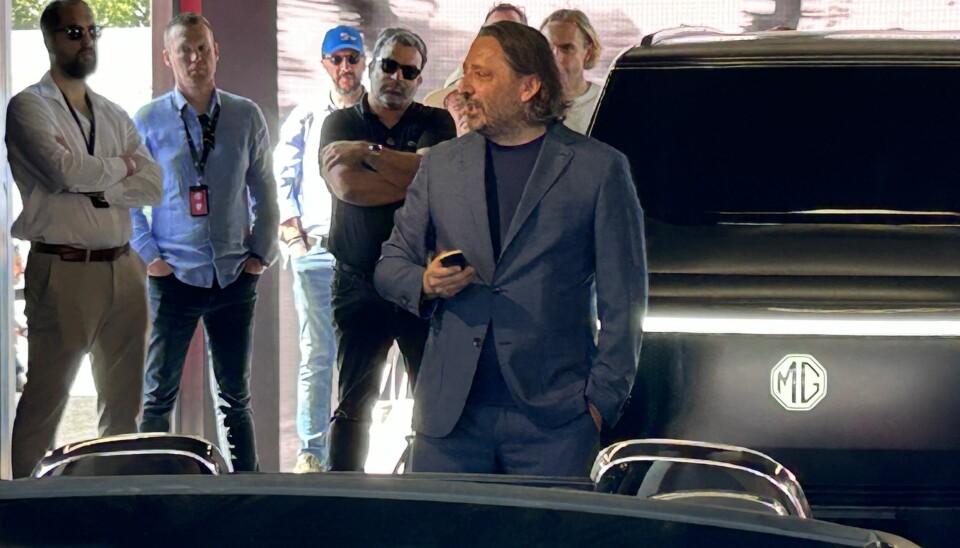
CDN: Should it be limited?
JK: It is, because we are part of an ecosystem that gives us trust. But you have to earn that trust. It’s great when a designer has vision. In my experience, when I was drawing, I was escaping the world. I needed nobody. Just paper. The world was unlimited. You could draw anything.
Then you come into the real world of industry and you find out it’s important not only to create, but to talk to people. You are powerful alone, but you are more powerful with people. Inspiring people becomes part of the job: learning to talk, to share, to be part of something and build on it.
My sister told me that kids at her school were doing a project about me. Small kids, eight or nine years old. Funny questions. One asked, “Is he still alive?” Because I’ve been around a long time
CDN: Was that a skill you had to learn?
JK: Yes. I realised it could help me. When things went wrong, you ask why. And many times you find out it’s because you didn’t make people believe in your vision. It’s not their fault, it might be yours, because you didn’t help them see what you saw. Sometimes losing is good. You find out maybe your vision wasn’t strong enough.
CDN: How important is it to nurture an open dialogue with the CEO?
JK: It’s very important. One key thing when you decide to do something, to go somewhere, is to ask whether what the brand believes matches what you believe. Can you imagine sharing that vision with the leader, the CEO?
It’s important to talk to these people early and find out how you feel after the conversation. Can you imagine talking more and more? Because it’s not only positive talk. Sometimes there’s tension. But it’s fine if you share a dream. I was lucky to meet great people. When I was young my heroes were Giorgetto Giugiaro, Pininfarina and Bertone. Those were my three stars.

Later I had teachers who were incredibly strict. In secondary school, before you draw cars, you do scissors. It felt boring, but you learn you are only at the beginning. You have to learn the basics.
Then at Volkswagen, people like Hartmut Warkuss were an inspiration. He was a strategic, visionary personality. Then Walter de Silva. And, as I said, Ferdinand Piëch was one of the greatest people I ever met. When you understand these people, and they understand you, you can grow.
CDN: Do you feel you’re now in a position to be that figure for others, the mentor and leader?
JK: You don’t want to accept that we’re getting older, but we are. I still feel I have so much to learn. I feel imperfect. So when you ask whether I want to teach, it’s difficult, because I don’t know if I’m good enough. But I do want to share, not because I want to, but because I think I have to. Two days ago my sister told me that kids at school were doing a project and writing about me. Small kids, eight or nine years old. Funny questions. One asked, “Is he still alive?” Because I’ve been around a long time. It’s nice.
But it’s not just cars. I learned one thing: whatever you do, if you put in the energy and you put in what you believe is right, people will feel it. You don’t need to be a car designer. You can be anything. You can fail. Don’t forget Van Gogh. You might fail, but maybe you are still happy. Maybe if he could repeat his life, he would do it the same way.

CDN: Do you think younger designers are more scared of failure than your generation was?
JK: I was scared all the time. It’s normal. I just ignored it.
CDN: Do they want everything to be perfect? Do they understand the value of getting it wrong?
JK: I think they do. I believe the younger generation may be better than we were. When I see how they draw and how they perform, it’s great. But the world is more hectic. Everyone is impatient. Everyone has to deliver immediately. And immediate results are usually not deep enough. If you want to be quick, you stay on the surface.
If you need to do something quickly, the first thing I say is: don’t start. Go and talk. Think first. Spend time clarifying the true target. Don’t think it’s wasted time. If you talk precisely at the beginning, you save discussion at the end. If you don’t talk at the beginning, in the end there will be a lot of discussion.
CDN: CEOs and management need to give design space at the beginning of a project to achieve the best result at the end. Is that a conversation they are willing to have?
In my culture we say: if you’re afraid of the forest, don’t go into the forest
JK: No brand has the same recipe. They know their technologies, their people, their mentality. And are they clear about the brand? Is it a real brand, or just a dream?
You have to understand why you’re doing something. What will it bring? What is the added value? Many times things are done first and then you try to find a reason. It’s quick, but usually not satisfying. The world is so diverse that sometimes the wrong way can work, sometimes the right way can fail. You always have to learn again and rethink your thinking. Don’t stay linear. Try to jump out of your thinking.
CDN: That’s difficult when the process is so fixed.
JK: Especially when you are successful. Then it becomes harder to imagine what could go wrong, or how to change. If you fail and recover, you learn. But if you don’t fail, you might forget how to step up when you do fail.
That’s why I keep many friends in other disciplines. I don’t want to love cars so much that I lose contact with the world. You have to know how to love, and how not to love too much.

CDN: That’s an argument for self-preservation: keeping a healthy distance from the thing you love.
JK: It helps. It’s not easy. I’m not saying my thinking is right, but it’s how I see things.
CDN: Would you say you’re a techno-optimist?
JK: I’m a life optimist. Once a strategy guy told me the future would be difficult and complicated. I asked him, “Why did you decide to be a strategy guy?” I didn’t need his answer. In my culture we say: if you’re afraid of the forest, don’t go into the forest.
The future will be great, for a simple reason: it’s the only one we are going to live. I’m not going to live a bad future. I’m going to live a great future. So whatever I do, even if it’s difficult, I try to turn it positive.
In my role it’s not about drawing the car. I can, but there are great people around me. It’s not about saying, “This light must be narrower.” My role is to make it possible for creative people to move.
And it’s not about saying designers are always right. Designers can be wrong. You have to find the balance: listen to the engineer, listen to the designer, listen to the data, listen to your heart. It’s psychology. It’s understanding the bigger picture. And you might still fail. But you have to be the light for the whole system, not just for design.