Interview
My Life in 5 Objects: Sophie Li

The incoming Audi China head of design shares five objects that reflect her love of design, from cars and art to sculptures and instruments
“Be as naughty as you want…” practice piece
A preparatory work by the London-based street artist Bambi is one of the pieces I have kept with me over the years. It precedes her widely recognised graffiti of Diana in Covent Garden – not the final mural, but the study that informed it.
Bambi’s work navigates the intersection of femininity, media and power, using a highly reduced visual language to create immediate resonance. Her depiction of Diana is less a portrait and more a symbol, something both intimate and constructed. What I like about this piece is its positi on within the process. In street art, once it’s on the wall, it’s fixed. This practice piece, however, captures an earlier stage which feels more open. You can get a glimpse of the arti st’s creative mind in it. That’s very close to design. The early stages, when things are still unresolved, are often the most honest. This piece reminds me to stay close to that part of the process.

Jaguar E-type - Series I
Advertisement
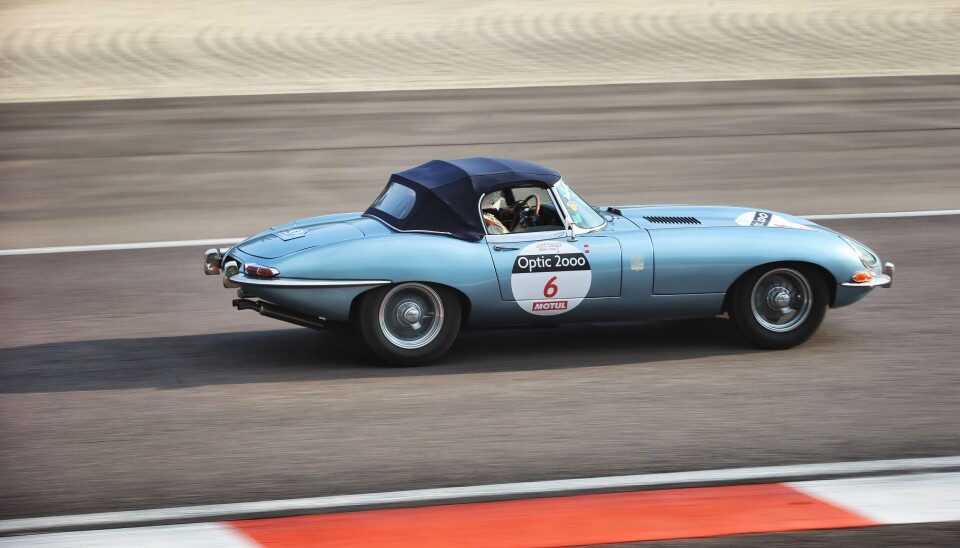
My uncle’s Jaguar E-type is something I connect as much with experience than ownership. In 2019, we drove it together in the Tour Auto – a modern revival of the original Tour de France Automobile, first established in 1899. Often described as one of the most beauti ful cars ever made (equally mentioned was the Volvo P1800), the E-type is frequently talked about for its look – the elongated bonnet , the purity of its lines. Yet its true quality only becomes apparent in motion.
I still remember driving it from a misty mountain road to a historical circuit. The engine purrs differently and the car feels so alive. You have to find the right balance so the rear of the car does not spin out easily. Events like Tour Auto bring these cars back to life. They’re not displayed, they are driven, pushed and experienced in real conditions. That’s when the design makes sense. It made me realise again that great automotive design is not defined solely by how it looks, but by how it feels in movement – how it connects driver, machine and environment into a single, continuous experience.
Chrome Gynoid – Hajime Sorayama
A limited sculpture by Hajime Sorayama explores a different dimension of design, one that exists between the organic and the engineered. The mirrored surface amplifi es volume and curvature, heightening the continuity of form. At the same time, the figure appears almost weightless, detached from context and reduced to surface and silhouette.
Sorayama has described his approach as “superreal”– not an imitation of reality, but a refinement of it. The contrast is deliberate: an industrial material shaped into something so sensational, almost human. He does not conceal the machine; he elevates it – suggesting that technology can possess its own form of beauty, even intimacy. As products become increasingly intelligent, this balance feels more relevant. The question is no longer simply how something performs, but how it connects emotionally. This piece reflects that future: one where precision and desire are intrinsically linked.

Roland Piano A Roland RD-300GX
I bought from a retired musician in the UK has been with me for over 15 years. Music offers a parallel form of creative thinking – structured, yet open to improvisation; disciplined, yet personal. I’m far from a professional musician but whenever I play, it creates a bit of distance from everything else. Often, that’s when ideas come back in a clearer way. There is also meaning in the instrument’s history – having passed from one owner to another. It carries a sense of continuity that extends beyond ownership, reinforcing the idea that creativity evolves rather than beginning anew.

Tibetan Lucky Charm
Advertisement
The fi nal object is small, almost unnoticeable – a charm from a Tibetan temple. Visiting the temple is a yearly ritual for me and my family. You wake up early, prepare your body and mind, and walk up the mountain without eating. Only after bowing in devotion and reciting sutras aloud – together with others gathered there – does the day begin. It’s quiet, but also very grounding. You become aware of your body, your breath, and the people around you. In a field that is constantly moving forward, this charm reminds me that not everything needs to be added or improved – sometimes it’s about returning to something simple and essential.

Advertisement