Interview
“The key in design is to be synergetic”: Andreas Mindt on the Volkswagen Group one platform approach

Head of Volkswagen Group Design Andreas Mindt expands on his design strategy across brands and how designing for affordability is a great skill
The Volkswagen group is adopting a largely standardised technical foundation across all its brands. As a result, hardware, software, batteries and charging will be uniform, enabling the group to scale up future technologies at a faster pace and more affordable cost.

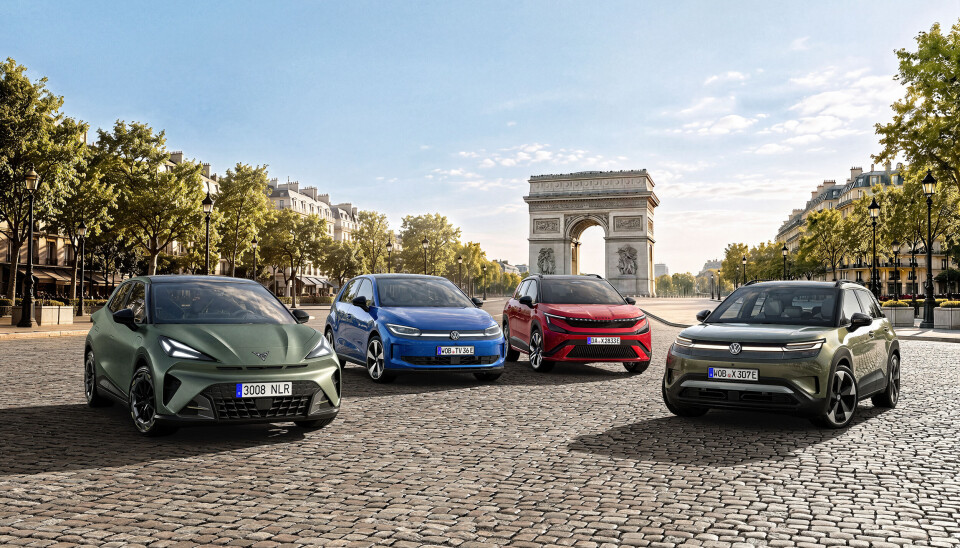
The first showcase of this shared platform is what the VW group has labelled as ‘one base, four models’ – bringing together the VW ID. Polo, VW ID. Cross, Skoda Epiq and Cupra Raval, with more than 80% of components and technologies common across the four models.
But what does this mean for design, now essentially the only differentiating factor between those cars? Andreas Mindt, head of VW Group Design, is in charge of ensuring each brand retains its point of difference, while also following the group’s new approach.
Car Design News sat down with Mindt to learn more about his role, which he adopted in February 2026, and the future of VW design.
Car Design News: Your role now is to oversee everything across the VW group, how involved are you in each brand?
Andreas Mindt: I understand myself more as a moderator between the brands. I don’t want to provide the content, they should be creating this, but we need to be clear about the direction and our values. We have a different mindset that guides you automatically to a differentiation in design.
This approach is very different to the past. For example, now when we develop a new AI tool, we develop it once for the VW group and then we give it to all the brands – including the smaller brands.
At Bentley [where I was design director] there were only 50 designers, at VW there are 350 designers – so there’s a big differentiation in methods. The group also pushes and enhances its brands, we almost see ourselves as providing a service for them. We aren’t like a mother figure though, telling them how to do things — I think that’s wrong. We see each brand eye to eye and discuss things.
I’m not driven by my ego – I have a mission, not an ego. I want to make the company survive the storm; that’s my mission.
CDN: Why is it important to have a role like yours that oversees all brands?
AM: We need some sort of strategic foundation to what we do. When we were discussing what we actually need for the base we found three layers – Trust, Connected and Approachable, and Excitement. Trust is something we need to grow together as a team, we need to help each other and build a really strong focus on design. As for Connected and Approachable, the key in design is to be synergetic and we have our proof here [gestures towards the four models with shared platforms], this is our lighthouse. Then the Excitement, this comes through each of the heads of design within the VW group that are strong characters, just like the brands. That differentiation is our strength in VW group design.
CDN: What’s the main challenge with the moderator role?
AM: There’s resistance all the time from all sides. Everybody wants to reinvent something. Sometimes we have to say no, you need to stick with this, and the result becomes interesting for customers. That’s what I want to chase.
I’m not driven by my ego – I have a mission, not an ego. I want to make the company survive the storm; that’s my mission. We are 350 people and everybody has a part. I cannot work without one person. I’m a curious person and I want to learn how things work – what’s good, what’s bad. I go to the production line and want to learn from our mistakes.
CDN: The unofficial theme of the Paris Motor Show seems to be reviving icons, what’s the design strategy behind this?
AM: Our three values are stable, likeable and secret sauce. You can apply this in the past, present and future so these values are timeless. I don’t want to repeat the same design over and over again, I think that’s a dead end. We had it with the Beetle, you keep making new versions and people start to wonder how the brand will evolve so you’ve got to stop somewhere.
The trick is to find something good that’s also affordable – which is harder work
We show stability through design – I can use a thick C-pillar, strong surfaces, wide wheel arches and a good stance and people like it because it makes them feel safe. This is mega important for VW and is somewhat retro because the value comes from the past. So, we are going into the future, but the values are from the past – that’s our point of difference.
CDN: Emotion is always a key part of design; how do you do this at the scale you are currently working at?
AM: [Designing for emotion] at Volkswagen is pretty hard because you don’t have many elements to play with. My time at Bentley was a completely different story – they have so many materials to play with – but at VW you have to find a solution that is affordable but also appealing. The trick is to find something good that’s also affordable – which is harder work but people don’t understand this, they think that hypercar designers are clever and we have it easy but it’s the other way around.
CDN: With this, how much does AI play a role in the design process? What sort of rules and regulations are you implementing across the group?
AM: AI plays a huge role, but we don’t use it for ideation. Creativity comes from us but then AI can be helpful for the steps between. I check myself on AI very often but it is only using what’s already on the market and if I put a sketch into AI, the result is dragging me back in time because they are mixing old with new. It is development and maybe next year we will be speaking about it differently, but for now is not helpful for creativity.