Car Design Dialogues Detroit 2026
‘Being a hot sketcher is no longer enough’ – Michael Check on the changing demands of car design
Linkage president Michael Check joins CDN on the Orange Sofa to discuss Detroit’s creative resurgence, the changing demands on automotive designers and how AI could accelerate development without compromising creativity
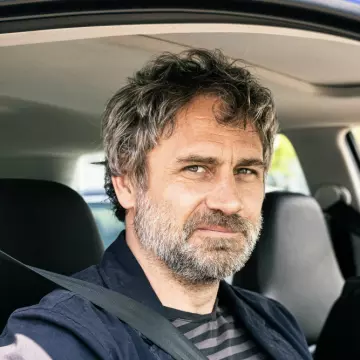


Speaking to Car Design News on the Orange Sofa, Linkage president Michael Check discussed Detroit’s creative resurgence, the changing demands placed on automotive designers and the growing influence of artificial intelligence on the design process.
For Check, Detroit remains a compelling environment for creative talent, combining an “edgy”, “meat and potatoes” character with a deep-rooted automotive culture. The transformation of formerly abandoned downtown buildings into thriving creative and residential spaces has helped reinvigorate the city, while events such as the Woodward Dream Cruise reinforce its enduring connection with the automobile.
The College for Creative Studies (CCS) remains an important talent pipeline for Linkage, with Check particularly impressed by graduates' work ethic and “can-do, get-it-done” attitude. However, technical ability alone is no longer sufficient. Today's automotive designers need versatility across traditional and digital disciplines, alongside the confidence to communicate ideas and explain the thinking behind their work.
Being a “hot sketcher” or proficient in Alias is no longer enough, Check suggested. Linkage looks for candidates with experience in clay modelling, polygon modelling and broader design disciplines, but personality and storytelling ability are equally important.
Artificial intelligence is also changing the profession, although Check regards it as a tool to enhance creativity rather than replace it. Applications including ChatGPT, Claude and Vizcom can accelerate research, generate alternative design directions and help teams move beyond the blank sheet. At Linkage, AI is already being used to rapidly explore and eliminate ideas, asking questions such as “is it too soft? Too hard?”
Perhaps more significantly, Check believes AI can accelerate decision-making. Executives can use generated imagery to communicate design feedback more clearly, reducing the time spent interpreting instructions and securing approvals.
This is increasingly important as manufacturers push towards development cycles of just 18 to 24 months. While digital modelling tools have become considerably faster, Check believes the human decision-making process remains a major bottleneck. He cited a recent Linkage project completed in just two months through AI-assisted development and accelerated decision-making.
Check also sees opportunities for AI to address longstanding inefficiencies behind the scenes, particularly the transfer of design data between different software platforms. Despite decades of technological progress, IGES and STEP files remain widely used, often requiring laborious manual preparation.
“There's nothing worse than getting an IGES file and having to manually clean it up,” he observed, suggesting that AI could automate much of this repetitive work.
Another frustration is the disconnect between vehicle design and marketing. Check highlighted instances where advertising agencies scan finished vehicles to recreate digital models that already exist within the manufacturer. Better integration between departments could eliminate this duplication and make more effective use of design data.
The discussion also touched on changing vehicle interiors, including Linkage's work with Waymo on the ergonomics of autonomous mobility, and the importance of storytelling in communicating design to consumers. Check believes designers are natural storytellers, with the journey behind a vehicle's creation often providing a compelling narrative for customers.
Ultimately, Check sees technology as an opportunity to remove inefficiencies and give designers more freedom to explore ideas. The challenge for the industry will be balancing increasingly compressed development schedules with the creativity and originality that make great automotive design possible.