Interview
“This is the best time ever for Chinese cars” – head of GAC global design Fan Zhang
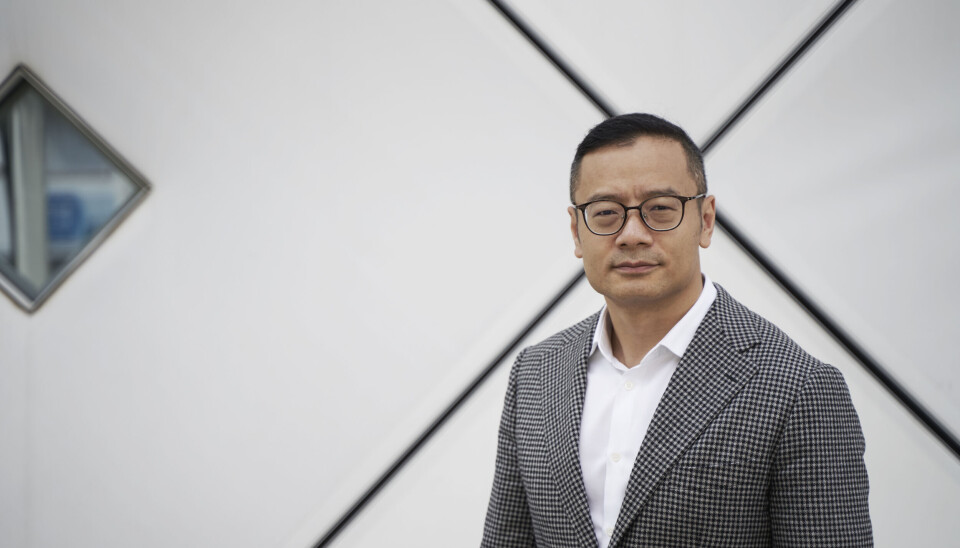
Car Design News spoke to Fan Zhang at the Paris Motor Show 2026 about the different approach Chinese OEMs are taking to motor shows, plus how GAC is tackling the European market

GAC had a strong presence at the Paris Motor Show this year with the global showcase of the Aion UT Cross – the European version of the Aion UT model.
While this launch represents a key step in expanding the brand’s product offering in the region, it forms just one element of GAC’s wider strategy to establish a long-term presence in Europe, building on the ‘Europe Market Plan’ first announced at the 2024 Paris Motor Show.
That commitment extends beyond introducing new models. One of GAC’s most significant investments in the region was the opening of the European advanced design centre in Milan in 2022, led by Stephane Janin – with this studio leading on the design of the Aion UT Cross. The group has also confirmed plans to open a GAC Europe R&D Center in 2027, which will include design facilities.
To find out more about the role design will play in GAC’s European expansion and the state of car design, Car Design News spoke to Fan Zhang, head of GAC global design.
Car Design News: How do you see how design evolving for the GAC group?

Fan Zhang: It’s an interesting question and you can see everyone is trying to explore the answer at Paris this year. I’ve noticed the OEMs are split into two – one half are represented by the French OEMs like Renault and Citroën, who are doing very cool and modern designs. But we need to ask are these designs that normal customers could imagine purchasing and using every day?
The other half are Chinese OEMs with their new energy and smart drive vehicles. Those cars are also bringing the new forms and user experience which is interesting to see.
French car companies bring a huge amount of show cars, with each brand having at least one or two concepts to show. Chinese OEMs are taking a different approach where any new ideas would quickly just turn into production – they’d rather provide the customer with the production car immediately rather than just show some fancy piece on the stand. I don’t think either way in the absolute right way through, and perhaps these two approaches can learn more each other. In general, I think everyone is kind of struggling while also having hope and new ideas.
CDN: Does this struggle affect motivation with designers?
FZ: This time period is actually easier for us because we originate from China and our reputation – no matter the brand or product – used to be bad. But now with this change in technology, the perception of the Chinese car industry is changing. This is the best time ever for Chinese cars.
One thing we need to be careful of, though, is that there are too many players in the Chinese market. When you have a certain number of players it's healthy because everyone is trying to push to be better, but when you have too many sometimes problems can happen, so we need to face this challenge. We also need to understand that this challenge brings opportunities. The only way to get out of this challenge is to create more characteristic and innovative design. Therefore, we feel even more blessed as designers to be able to show our strengths and be the game changers.


CDN: You’ve debuted the European version of the Aion UT at Paris this year, what makes this vehicle ‘Europe ready’?
FZ: We need more products for the European market, but for each product we want to take it really seriously and meet all the requirements of the high standard of the European market and customers. We are not just throwing out lots of new products into the market, we make sure each product we develop has a clear intention and connection to customer needs. So, this UT Cross is a needed product as the UT already provides a pretty good user scenario for urban usage, but now young people have more versatile needs so a car like [the UT Cross] provides a spacious interior and a higher level of trim and interior options. The infotainment system will also be seamlessly connected with their mobile.
As for the exterior, the UT Cross has more of an outdoor style – this doesn’t mean you should take this car off-roading – but appearance-wise we deliberately tried to make the car look tougher and add an outdoor flavour. So for the UT Cross we redesigned the front and the rear bumper to appear more masculine and solid.
CDN: How did GAC’s Milan studio play a part in the design of the Aion UT cross?
FZ: The Aion UT was originally designed by our Milano colleagues, and they also designed the upgrade of the car, the UT Cross. Stephane Janin heads up the studio and he has a very, very strong team who are very young. The team now has around 18 designers and most of them are young, so they bring fresh and fearless ideas. They don’t have the traditional petrol car design mentality and are very bold which gives us a lot of edge in terms of trying to produce a good design and also capturing what the next generation wants.
CDN: How do you make sure that each vehicle you release can stand out design-wise?
FZ: We need to have proper product planning to make sure all the products have a clear mission and that, in combination, fulfil our overall product strategy. With that very clear mission, then we assign the design to the product according to its mission. Each mission relates to a certain target group, and this target group will give you all the information designers need to organise their weapon of form, curvatures and surfacing to shape the car.