Who went where?
Top people moves in car design 2025


This month Car Design News turns the spotlight on the most significant people moves shaping the global car design industry in 2025
This past year has been an interesting one for automotive design. Against a backdrop of economic uncertainty, accelerating electrification and AI-driven workflows as well as ever-greater brand scrutiny, studios around the world have continued to evolve – sometimes quietly, sometimes dramatically.
Behind the scenes, designers were on the move. Some of these changes felt inevitable: the natural progression of long-standing careers, carefully planned successions or strategic hires that work with brand ambitions. Some arrived with little warning and others are still shrouded in mystery (cough Gerry McGovern cough).
This level of churn, however, is not a sign of instability. On the contrary, it is part of what keeps car design dynamic, competitive and creatively charged. Fresh leadership can reset a studio’s direction, and a single high-profile appointment can signal a fundamental shift in brand values, design language or even corporate culture.
With that in mind, as part of Car Design News’ people focus, we look back at some of the most notable people moves of the past year. We examine who went where and what these changes could signal for the future of automotive design.

Gerry McGovern
Let’s start with perhaps the most dramatic people news of the year – the kind that ricochets around Whatsapp groups before anyone has had time to find a press release template.
Reports surfaced that Gerry McGovern had left JLR, allegedly escorted from the building, with sources close to CDN claiming there were even audible cheers from some quarters of the business. Hearsay, for now. Automotive design rarely descends into pantomime, but when it does, it tends to involve big personalities.
JLR eventually issued a statement to CDN, reading: “It is untrue that we have terminated Gerry McGovern’s employment and we do not intend to further comment on speculative stories. It’s not on record that Gerry has left the business, I appreciate this allows space for speculation.” Which, of course, it did.
Speculation aside, McGovern’s influence on the company is unquestionable. He was instrumental in defining the modern Range Rover, Defender and Discovery, and in elevating Range Rover into a standalone luxury marque under JLR’s Reimagine transformation plan.
Whatever the truth behind the rumours, McGovern’s story at JLR feels close to its final chapter – and the industry will be watching closely to see what, if anything, comes next.

Gilles Vidal
If McGovern’s situation was murky, Gilles Vidal’s move was refreshingly clear. Appointed head of design for Stellantis Europe, Vidal returns to familiar territory after a spell as VP of design at Renault Group. In his new role, he oversees the creative direction across Stellantis’ European portfolio, from city cars to light commercial vehicles, working closely with global chief of design Ralph Gilles. Operationally, however, Vidal reports to Jean-Philippe Imparato, Stellantis’ enlarged Europe chief operating officer.
This move marks a homecoming of sorts, Vidal spent 25 years shaping Citroën and Peugeot, and his fingerprints are all over some of the group’s most successful modern designs. He replaced Jean-Pierre Ploue, signalling a generational shift at the top of Stellantis design in Europe.
Reflecting on his return, Vidal spoke of reconnecting with his design roots while navigating an industry where technology and design are increasingly inseparable. He appears to have been very warmly welcomed back to the Stellantis brand.

Scott Krugger
Across the Atlantic, Stellantis also made a decisive move by appointing Scott Krugger as head of North America design. Formerly head of Dodge and SRT design, Krugger steps into a role that closely resembles the one once held by Ralph Gilles himself, before Gilles was elevated to global chief design officer.
Reporting to newly appointed CEO Antonio Filosa, formerly chief operating officer for Stellantis North America, Krugger’s promotion signals continuity rather than revolution. He is steeped in the brand’s performance-led DNA, but now carries responsibility across a broader portfolio. Not a small task, but one Krugger appears well prepared for.

Alexandre Malval
At Renault Group, change came swiftly after Vidal’s departure. Alexandre Malval was appointed design VP, reporting to Laurens van den Acker. Malval brings with him a quietly formidable CV. Most recently CEO and design director of the Mercedes-Benz International Design Centre Europe in Sophia Antipolis, he also previously led Citroen design – a background that neatly bridges French creativity and German precision.
His appointment suggests Renault is doubling down on design leadership that understands both brand storytelling and global studio management. With Renault continuing to reposition itself in an increasingly competitive EV market, Malval’s experience may prove particularly valuable.

Jeremy Offer
Volvo, meanwhile, saw an unexpected exit. Jeremy Offer resigned as head of design just months after former Polestar CEO and Volvo design chief Thomas Ingenlath re-emerged as executive design advisor at Geely Holding. Officially, Offer stepped down to prioritise family and reduce travel between Sweden and the UK – a rationale that will resonate with many designers who have spent years living on aeroplanes between countries.
Nicholas Gronenthal, currently head of automotive design at Volvo Cars, stepped in as interim head of design. This does raise questions about how design authority will be distributed across Volvo, Polestar and the wider Geely group.

Gorden Wagener
Another heavyweight departure came from Stuttgart. Mercedes-Benz confirmed that chief design officer Gorden Wagener will leave the company at the end of January 2026.
An RCA graduate who joined the brand in 1997 and became, at 39, its youngest-ever head of design, Wagener rose to chief design officer in 2016 – a role that will not be carried forward for now. Instead, Bastian Baudy, currently head of AMG design, will step up as head of design for Mercedes-Benz from February 2026, a move that raises intriguing questions about how a performance-led mindset will translate across the wider portfolio.
Wagener, for his part, struck a reflective note on Instagram, stating: “the future for the next decade has already been designed” and that the timing felt right to move on.
While his recent comments on AI in design sparked controversy, his broader legacy is harder to contest: few designers have fought as consistently, or as successfully, to keep design central to corporate decision-making at a global automotive giant.
Felix Kilbertus
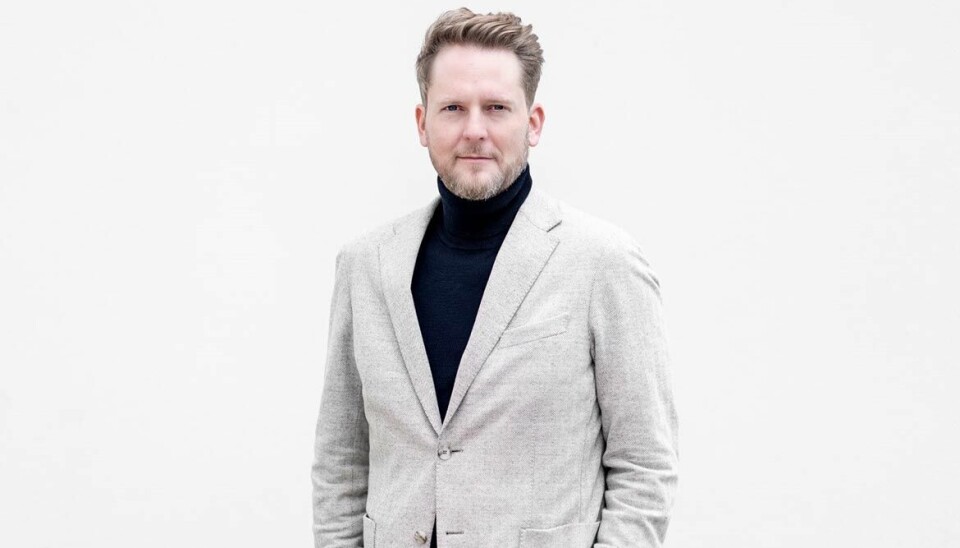
In September, Felix Kilbertus departed Pininfarina after just two years as chief creative officer. His arrival had been as a statement of intent: a designer with an international resume, including leading exterior design at Rolls-Royce, brought in to help steer the famed Italian house through a period of diversification and global expansion.
His exit, and the absence of an announced successor, leaves Pininfarina at an intriguing crossroads. This marks the second major leadership change in recent years following Kevin Rice’s departure in December 2022.

Dominic Najafi
At Cadillac, Dominic Najafi was promoted to execute design director, moving from his role as head of studio and exterior design at GM Advanced Design Europe in Leamington Spa. While Cadillac may not have been his sole focus in Europe, Najafi is no stranger to the brand – or to the US.
Currently relocating to Warren, Michigan, Najafi will work under new global GM design boss Bryan Nesbitt, who took over following Michael SImcoe’s retirement. With Cadillac pushing hard to redefine itself as an electric-first luxury brand, Najfari’s promotion suggests GM is placing faith in designers who can bridge continents and cultures.

Sid Odedra
Sid Odedra joined Polestar as head of UX/UI in January 2025, taking on the same title he previously held at Audi. Working under design boss Philip Roemers, Odedra arrives as a pivotal moment for Polestar as it refines its brand and product strategy.
Odedra himself acknowledged the timing, describing the challenge of evolving the brand while ensuring it remains unmistakably Polestar.

Alister Whelan
McLaren Automotive appointed Alister Whelan as its new chief creative officer, replacing Tobias Suhlmann. The move follows McLaren’s acquisition by CYVN Holdings, the Abu Dhabi-based entity that also owns Forseven – Whelan’s previous employer.
Having joined the mysterious EV start-up Forseven in early 2023 after a stint at Nio, Whelan now shifts to McLaren as the two companies formally merged in April 2025. At the same time, Forseven CEO Nick Collins assumes a parallel role as McLaren Group Holdings.
Of course, there were plenty of other moves in the industry this year, which you can read in the Designers section of the website.
But looking ahead to 2026, perhaps with so many senior designers reshuffling the deck, the coming year will be about watching new design philosophies evolve and strengthen. We will certainly be watching to discover which of these appointments truly reshapes the road ahead.