Autonomous driving
Start them young – Toyota reveals autonomous kids mobility solution
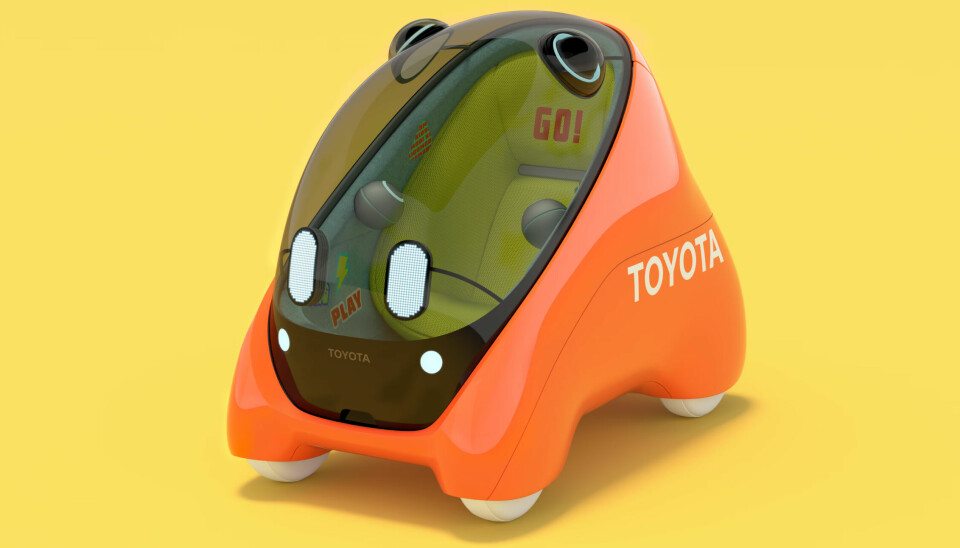
Autonomous solutions open up new possibilities for individuals without driving licences, Toyota has taken this to a new level with an autonomous vehicle for children
While the bubble car has been undergoing a quiet revival with the likes of Microlino now producing BMW Isetta-inspired quadricycles, Toyota is targeting a slightly different market. Leveraging autonomous electric vehicle technology, the company revealed what it describes as “safe and secure AI-powered personal mobility for kids”.
Kids Mobi plays on the iconic bubble car design, much like the L’Œuf Electrique, to give its occupant full visibility of their surroundings. Access to the cabin is provided via a lifting canopy and the vehicle is designed for a single passenger measuring up to 130cm tall (or about four foot three.)
Speaking at the Japan Mobility Show, Koji Sato, president and CEO of Toyota, explained the thinking behind the concept: "If we had something like this, wouldn't it open a whole new world for children? From that idea, our colleagues gave form to a mobility solution for children.”

The central theme of Toyota’s mobility show display was ‘to you’, which describes a shift away from generic approaches and instead mobility that is personalised to each user in some way. Sato explained: “Thinking of someone — a single ‘you’ — and exploring how we can fulfil that person's needs. We want to make various ever-better cars by pursuing the ‘to you’ ideal, believing that will lead to producing happiness for all.”
Advertisement
Unlike Toyota’s typical target user, the Kids Mobi design centres on appealing to children. This starts with the external features of the vehicle to present it as a character. Sensor clusters are mounted in an ear-like position while two LED displays act as ‘eyes’ which can express different emotions. At the rear, a digital LED strip can be customised to show different messages.

For stability and interior space, the wheels have been pushed to the outer corners of the vehicle. In line with its kid-friendly approach, smooth rounded edges are dominant throughout the design, an important consideration since children are likely to physically interact with the vehicle in a way adults wouldn’t.
Inside, Toyota promises a ‘UX friend’ which is expected to be an AI companion to entertain and interact with the child in the vehicle. The manufacturer claims that Kids Mobi represents the “ultimate goal of AI x Robotics.”
While Toyota has yet to release specifications or confirm production intent, the concept could lay the foundation for future developments in voice command and gesture recognition technologies combined with AI for seamless UX.

The interior is trimmed with tactile fabrics in bright colours, again appealing to the child user. Since the vehicle is autonomous, there are no pedals, steering wheel or other controls inside.
Sato concluded, “Sometimes you succeed with an invention, and sometimes things don't turn out the way you had hoped. But the difficulty is what makes something worth doing. That's what taking on challenges is all about. A future created by all the ‘you’s around the world... We want cars and countless smiles to be right at the centre of that future. For this, we want to make cars even more beloved and fun.”
As cute as the Kids Mobi might be, the concept raises wider questions around safety and how autonomous solutions could feature in the future. For some it might seem like a bid to normalise autonomous transport from childhood, seeding the landscape for future generations who will be more receptive to autonomous solutions. For others, it’s an innocent idea that many adults wish they could experience, delivering on Sato’s ‘fun’ brief.

Perspectives, amongst other things, will largely be influenced by cultural differences, an important reminder for understanding the user and region you’re designing for. In Japan, it’s more common to send children on errands or have them walk to school on their own from a much younger age. In high trust societies, Kids Mobi will likely be better received, potentially informing if and where Toyota decides to take the concept any further.
Advertisement
For now though, this concept offers an insight into how Toyota is approaching the needs of child occupants. From pushing ahead the agenda of autonomous mobility to demonstrating how design can be thoughtfully adapted for children, Kids Mobi is perhaps the most compact approach to autonomy yet, all in the familiar guise of a bubble car.
Advertisement