"Both phases are about production"
Interview: Renault's new advanced design chief

The recently appointed head of advanced design says there are subtleties between advanced and production projects: one asks questions, one answers them
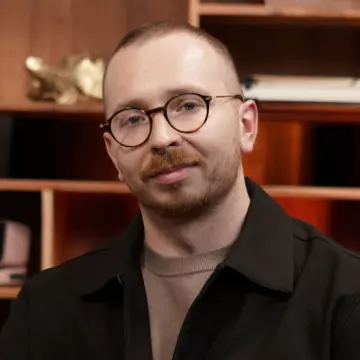
Renault’s new advanced design boss Romain Gauvin knows a thing or two about the job. Formerly chief of exterior and advanced design at Dacia, the Frenchman took on a new role just last month — although it will be a familiar commute to Technocentre on the outskirts of Paris, where both brands are based.
Prior to Dacia he was senior lead designer at GAC’s advanced studio in Los Angeles, and even a cursory glance through his earlier experiences suggests an early interest in creative design projects. Now heading up advanced design at Renault, he does indeed point towards the “privilege of shaping what comes next for a brand that has always bet on creativity and imagination.”

As part of our monthly focus, Car Design News had a quick chat with Gauvin to learn more about his mindset.
Car Design News: How does the design approach differ between Advanced and Production studios? Similar processes, slightly more freedom to explore?
Romain Gauvin: Very interesting question that points to the subtleties between these two phases. I prefer referring to 'Advanced' and 'Programmed' phases because both are about production. I have led both Programmed and Advanced projects, often simultaneously, so I think I have a good grasp.
On the surface we do the same work, we get inspired, we sketch, we build up to tridimensional assets both physical and digital that we present to other functions of the company internally and communicate externally.
But the truth is, we do it with fundamentally different reasons: The Advanced phase is asking questions, and so much relies on asking the right ones; while the Programmed phase is trying to answer them.

CDN: Are there any misconceptions around the 'role' of an advanced design studio? What is its main task and contribution to a brand in your eyes?
RG: I think the biggest misconception about advanced design has to do with the impression that we want absolute freedom from technical constraints.
And maybe a few years back it was indeed the case that, because of long development times, we had to project ourselves quite far in order to see past what was possible at the time. But things have changed now and the role of advanced design has evolved a lot. We now have very advanced and exciting technologies that we only dreamed of back then.
Concept cars are fast paced, ambitious and you work with all functions of the company
We are rethinking our processes for rapid time to market: the technologies are there, we just need to figure out what we want to do with them. Advanced design is uniquely and strategically placed to make proposals and help our management team make informed decisions so that, when we think we have a winning concept, we can pull the trigger and get to the market as quickly as sixteen months.
CDN: Is there a recent advanced project that you really enjoyed working on?
RG: I was lucky enough to have the chance of leading many dream projects. Among those, concept cars are some of the best experiences. They are fast paced, ambitious and you get to work with all functions of the company in a very short time.
What I enjoy the most is watching people do their best work yet, seeing passion in their eyes... I usually have my camera handy and take some pictures to catch a glimpse of this energy. I think the best example yet of a project with this special energy is the Manifesto/Sandrider.

I started working on the Manifesto on day one of my appointment as head of advanced design for Dacia and I had three months and a very modest budget to get the project across the line. So the Manifesto was very much a "shoot from the hip" sort of gesture, no time for second guessing and I very much enjoyed the focus these constraints gave us.
It was supposed to be a closed model with no interior but with some clever thinking we found we could do an interior if we had no doors and no glass and we found it was actually even better that way. Like that, the Manifesto was born.
CDN: What do you recall about the reveal of that advanced design project?
RG: We presented the concept internally before the public reveal and another idea sparked in our CEOs head in real time. We were going to race in the World Rally Raid (W2RC) championship and try to win Dakar with that car.

Of course we had to completely rethink the entire car but in a design meeting that must have lasted a couple of hours we had positioned the main elements such as windshield, spare wheels, vision angles, bonnet etc. the car was there and it was still the Manifesto. Not long after we won the first race in Morocco, the car was very competitive from the outset and ultimately won Dakar — and is still leading the championship.
This is exactly how I see advanced design: clear vision, use constraints like opportunities, win people over rather than fighting them. React fast and in a convincing way, be convinced in yourself, help decision makers steer the company in the right direction.